
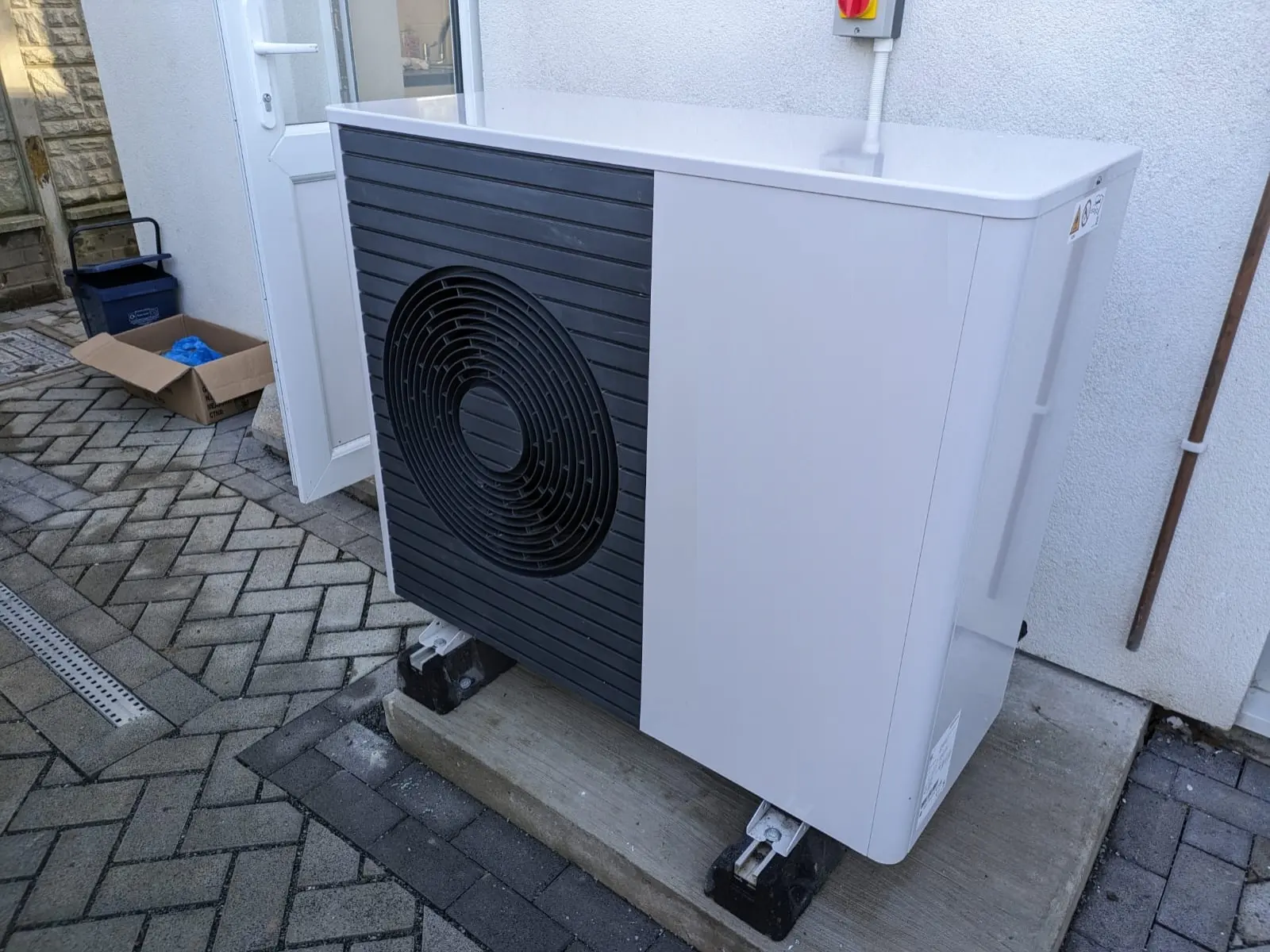
Heat Pumps · Suffolk County
Heat pump installation
in Suffolk County, NY.
About 44% of occupied Suffolk County homes still heat with fuel oil (US Census, 2020–2024). We size a cold-climate heat pump to your house by Manual J, check your PSEG Long Island rebate tier, and quote it. Our installation partner does the install.
- Oil and propane switch-overs
- Manual J sizing
- PSEG rebate tier checked first
- Across Suffolk County
Suffolk heat pump service
Sized by Manual J.
Installed through our partner.
Sized to your house
PSEG’s whole-house rebate needs a Manual J load calculation and a system that meets 100 to 120% of the entire heating load.
Installed through our partner
EnergiSense plans and quotes the job. The installation is done by EnergiSense’s installation partner.
Founder-led intake
Your request goes to Alex, not a lead aggregator or call center.
Suffolk heat pump decision
Six things decide
a Suffolk heat pump job.
We work through each one with you before the proposal is written, starting with what heats the house today.
01
What heats the house today
Oil, propane or gas, and whether it feeds ducts, baseboard or radiators. In Suffolk, fuel oil heats 44.0% of occupied homes and utility gas 41.1% (US Census).
02
Ducts or no ducts
A heat pump can be centrally ducted or ductless. Rewiring America says ductless mini-splits may be a good fit if the home has no existing ductwork.
03
The heating load
A Manual J load calculation sets the size. PSEG’s whole-house rebate requires one, and the system must meet 100 to 120% of the entire home’s heating load.
04
The old system
Keep it as backup with integrated controls, with the heat pump as the primary heat, or remove it. PSEG’s rebate accepts either. Rate 580 needs the heat pump to supply all of the building’s heat.
05
Your utility and your tier
LIPA, which runs as PSEG Long Island, does not serve the Village of Greenport, and Fishers Island is served by Fishers Island Electric Corporation. Your income, household size and address set the rebate tier.
06
Panel and permit
Electrical panel capacity and the permit path for your town or village are checked before the quote.
Suffolk housing, by the numbers
What Suffolk homes heat with today.
The US Census American Community Survey (2020–2024, five-year estimates) shows how Suffolk homes are heated, how old they are and what kind of houses they are, next to Nassau for comparison.
- Fuel oil heats 225,301 of 512,565 occupied homes: 44.0%. In Nassau it is 26.5%.
- Utility gas heats 41.1%, bottled, tank or LP gas 4.0%, and electricity 9.2%.
- The median Suffolk home was built in 1970; the median Nassau home in 1955.
- Single-family detached houses are 79.7% of Suffolk housing units, and 82.2% of occupied homes are owner-occupied.
- For a house on oil or gas, the plan starts with two questions: ducted or ductless, and keep the old system as backup or remove it.
Oil and propane switch-overs
Moving a Suffolk house off oil or propane.
Fuel oil or bottled, tank or LP gas heats 47.9% of occupied Suffolk homes (US Census ACS 2020–2024). PSEG Long Island allows two ways to switch and still qualify for the whole-house rebate.
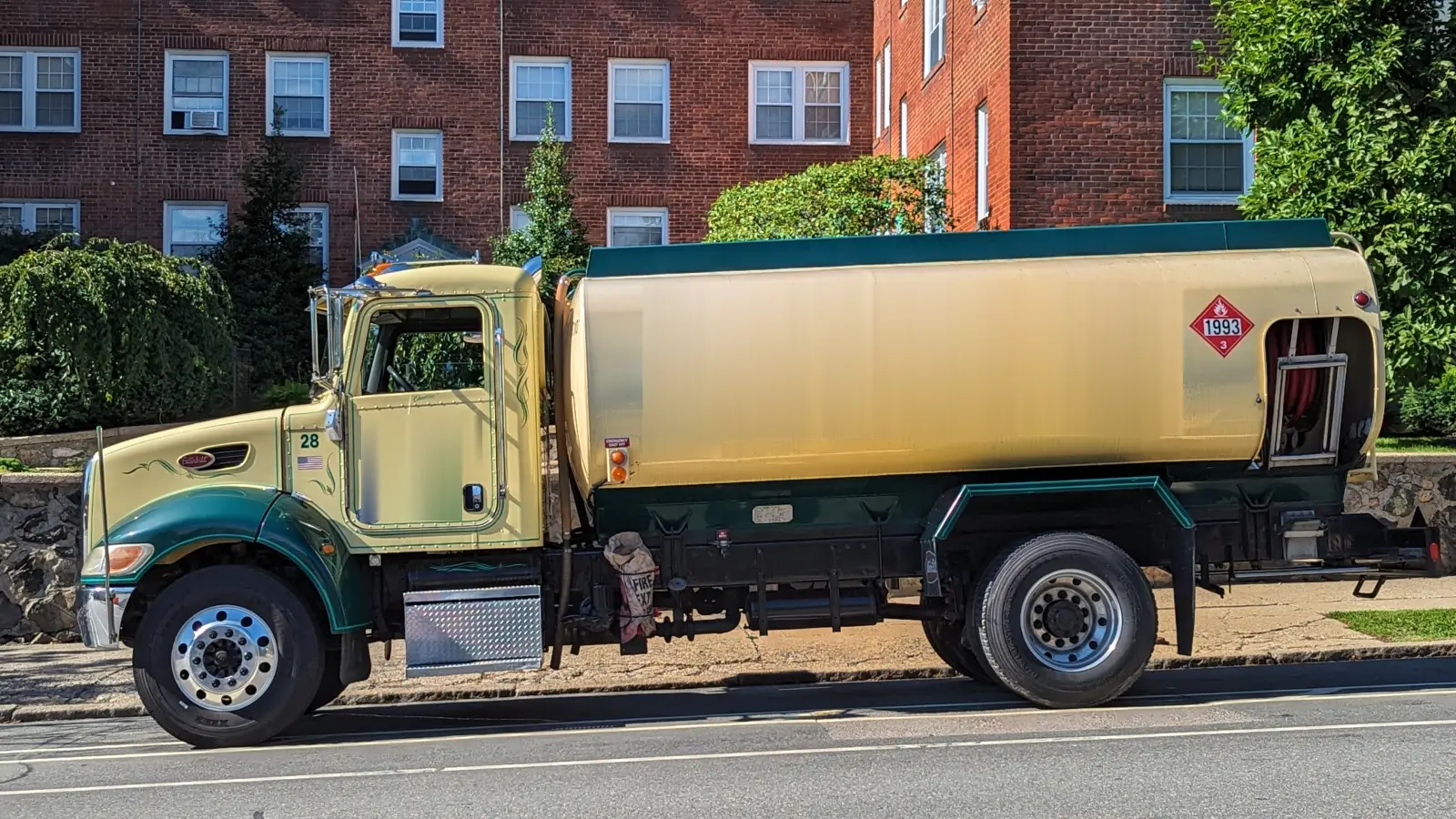
- Keep the old system as backup: a dual fuel thermostat or integrated controls make the heat pump the primary heat and the oil or propane system secondary.
- Or remove it: PSEG accepts removal of the existing fossil fuel heating system instead of integrated controls.
- Rate 580 follows the removal path: LIPA’s tariff requires the heat pump to supply all of the heating requirements of the building.
- Either way the heat pump must meet 100 to 120% of the entire dwelling heating load, by Manual J.
- No ducts? Rewiring America says ductless mini-splits may be a good fit for homes without existing ductwork.
- Oil tank removal, if you want it, is listed as its own item on the proposal.
Cold-climate sizing
Sized for a Suffolk winter, by Manual J.
PSEG’s rebate sets the sizing rule: a Manual J load calculation, and a system that meets 100 to 120% of the entire dwelling heating load, using equipment on the NEEP cold-climate list.
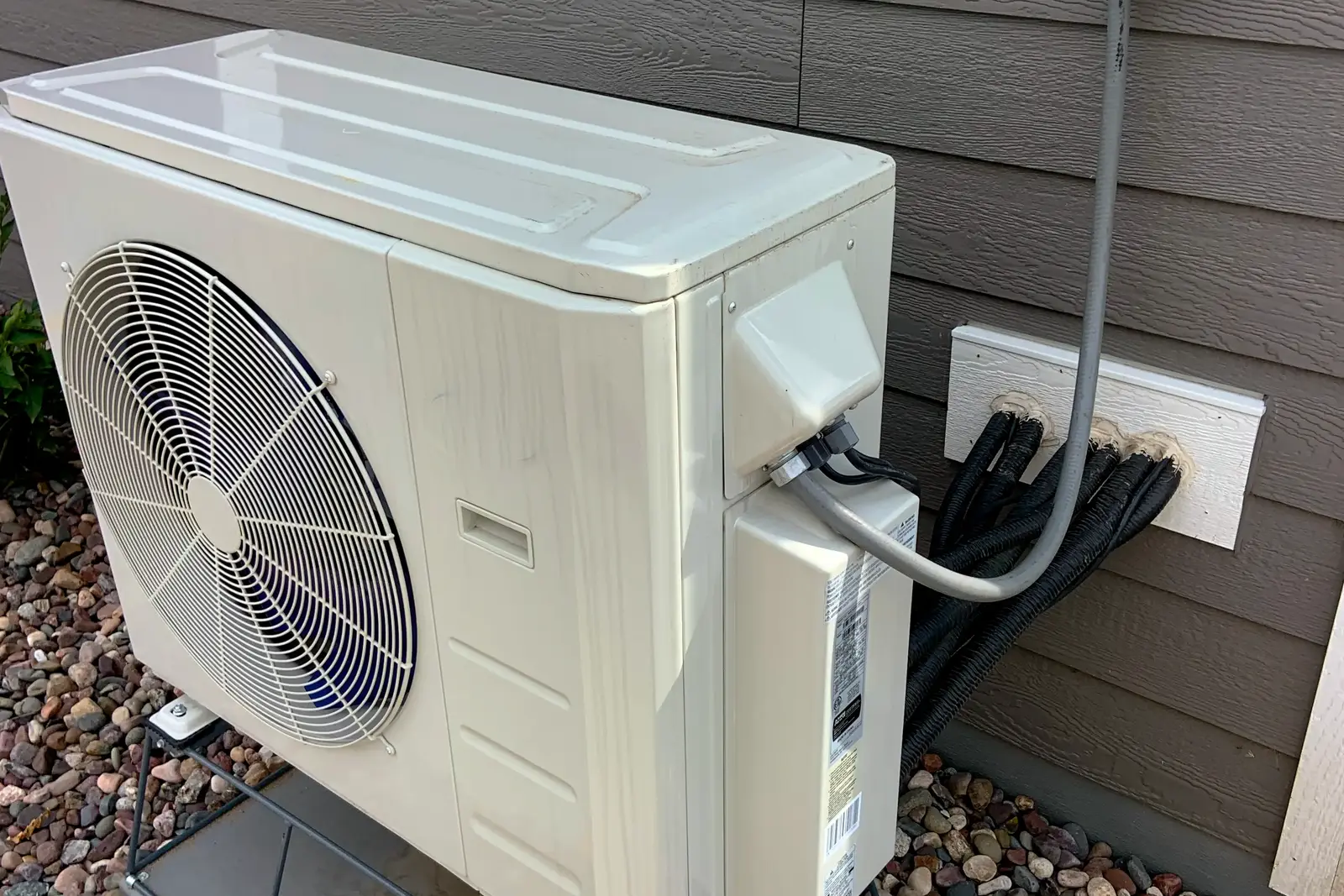
- Manual J load calculation on the house as it will be after any air sealing or insulation.
- System sized to 100 to 120% of the entire heating load, as PSEG’s rebate requires.
- Equipment on the NEEP cold-climate list; NEEP’s specification requires a COP of at least 1.75 at 5°F at maximum capacity.
- Backup heat, if kept, used only when temperatures are extremely low; PSEG says ideally below 15°.
Envelope first
Seal the house, then size the heat pump.
Cornell Cooperative Extension of Suffolk County strongly recommends doing air sealing and weatherization work before installing air source heat pumps. Rewiring America notes that homes with better insulation require less heating and cooling capacity.
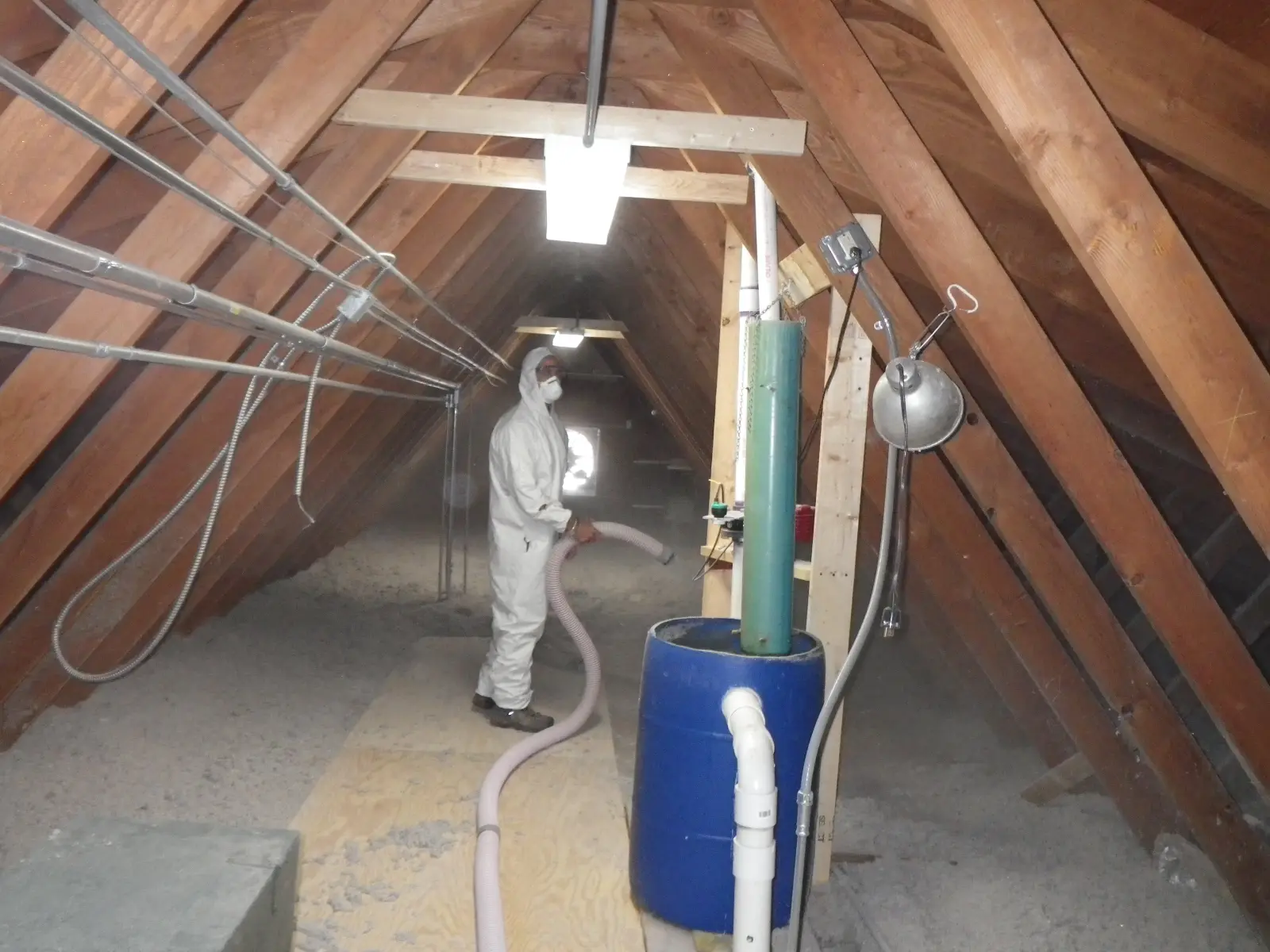
- Home energy assessment first, to find the leaks and the insulation gaps.
- Air sealing and attic insulation where the payback supports it.
- Duct sealing if the house has ducts the heat pump will reuse.
- Then the Manual J on the tightened house, so the equipment is not oversized.
PSEG Long Island rebate in Suffolk
Up to $7,500 for a whole-house system.
PSEG Long Island lists its single-family heat pump rebate under whole-house projects, by income and location, and says you must use one of its participating contractors to be eligible.
- Market rate: $4,000.
- Market rate in a disadvantaged community, or moderate income under 80% of area median income: $5,000.
- Low income under 60% of area median income: $7,500.
- 2026 limits for a household of four: $98,925 (low income) and $131,900 (moderate income). Income is verified through PSEG.
- Rebates are per single-family home (1 to 4 units), and PSEG notes cost caps may apply.
- Equipment must be purchased from and installed by a participating Home Comfort Partner. Check any contractor in PSEG’s Contractor Finder.
- Not available in the Village of Greenport (LIPA does not serve it) or on Fishers Island (Fishers Island Electric Corporation).
Where we work in Suffolk
Ten towns. Check your utility first.
Suffolk County is divided into ten towns, with Riverhead as the county seat. The county lists a town hall for each town and a village hall for each incorporated village, so the permit path is confirmed from your address. We take requests from across the county; for Riverhead, Southampton, East Hampton, Southold and Shelter Island addresses, coverage and scheduling are confirmed at intake.
- Towns: Babylon, Brookhaven, East Hampton, Huntington, Islip, Riverhead, Shelter Island, Smithtown, Southampton, Southold.
- Brookhaven includes the Villages of Port Jefferson, Patchogue and Bellport.
- Villages such as Patchogue, Port Jefferson, Northport and Sag Harbor have their own village halls.
- Village of Greenport: no PSEG rebate or Rate 580, because LIPA does not serve it.
- Fishers Island, in the Town of Southold: served by Fishers Island Electric Corporation, so no PSEG rebate or Rate 580.
What it costs
Market ranges, then the rebate.
Rewiring America models a whole-home heat pump at $17,000 to $23,000 installed for 1,500 to 2,500 square feet (median $19,500) and $22,500 to $28,000 for 2,500 to 5,500 square feet. It says homes in colder climates or in regions with high labor costs are likely to fall at the higher end. These are national ranges, not an EnergiSense quote.
- At the $19,500 median: $15,500 after the $4,000 market-rate rebate.
- $14,500 after the $5,000 moderate-income or disadvantaged-community rebate.
- $12,000 after the $7,500 low-income rebate.
- Rewiring America: the more heating and cooling capacity you need, the more you are likely to spend.
- No federal 25C credit for a 2026 install; the IRS says it covered improvements through December 31, 2025.
How a project runs with EnergiSense
Plan, rebate check, quote, install.
Send the ZIP and what heats the house today. EnergiSense plans and quotes the job. The installation is done through EnergiSense’s installation partner.
- 1. Intake: address, current fuel, ducts or no ducts, and recent PSEG bills.
- 2. Load and layout: Manual J, duct check, and the ducted, ductless or mixed plan.
- 3. Rebate check: your tier, and the installing contractor’s PSEG program status, before any rebate is counted.
- 4. Proposal: equipment, cold-climate listing, controls or removal plan, electrical scope and permit.
- 5. Install through our partner, then apply to PSEG for Rate 580 if the heat pump supplies all of the building’s heat.
Heat pump vs. oil or propane
What changes in a Suffolk house.
| Factor | Heat pump | Oil or LP |
|---|---|---|
| Suffolk homes | Electric heat of any kind: 9.2%. | Oil 44.0%, LP gas 4.0% (Census). |
| Fuel | Electricity. | Fuel oil or LP gas. |
| Rebate | $4,000 to $7,500, whole house, participating contractor. | None: PSEG says only electrical efficiency or electrification measures qualify. |
| Rate | Rate 580 if it supplies all the heat: 40% off delivery above 400 kWh, Oct to May. | Not eligible for Rate 580. |
| Backup | Old system can stay for the rebate, but then Rate 580 does not apply. | Stays the primary heat. |
Related paths
Suffolk is one county.
Here is the rest of the plan.
Sources
Suffolk facts and rebate rules
from the people who publish them.
These are the program, government and research pages behind this page, read on November 2, 2026. Rebate tiers and eligibility are re-checked for your address before they appear on a proposal.
Heat Pumps · Suffolk County FAQ
Questions before
the appointment.
Who installs heat pumps in Suffolk County?
For the PSEG Long Island rebate, PSEG says eligible equipment must be purchased from and installed by participating Home Comfort Partners. You can check any contractor in PSEG’s Contractor Finder, and Cornell Cooperative Extension of Suffolk County keeps a list too. EnergiSense plans and quotes the job, and the installation is done through our installation partner. We confirm the installing contractor’s program status before any rebate goes on your proposal.
How much does heat pump installation cost in Suffolk County?
Rewiring America puts a whole-home heat pump at $17,000 to $23,000 installed for a 1,500 to 2,500 square foot home (median $19,500), and $22,500 to $28,000 for 2,500 to 5,500 square feet. It says homes in colder climates or in regions with high labor costs are likely to fall at the higher end. These are national ranges, not an EnergiSense quote. A PSEG rebate of $4,000, $5,000 or $7,500 comes off a qualifying whole-house system.
How much does a heat pump cost for a 2,000 sq ft home?
A 2,000 square foot home falls in Rewiring America’s 1,500 to 2,500 square foot band: $17,000 to $23,000 installed, median $19,500. At the median, the PSEG Long Island rebate brings that to $15,500 at market rate, $14,500 at the moderate or disadvantaged-community tier, and $12,000 at the low-income tier. PSEG’s rebate requires a Manual J load calculation to set the size.
What heat pump rebates are available in Suffolk County?
PSEG Long Island pays $4,000 at market rate, $5,000 for a moderate-income household (under 80% of area median income) or a market-rate home in a disadvantaged community, and $7,500 for a low-income household (under 60%). For a household of four in 2026, the limits are $98,925 (low) and $131,900 (moderate). The system must carry 100 to 120% of the whole home’s heating load by Manual J, use NEEP-listed equipment, and be installed by a participating contractor.
Is there still a federal tax credit for heat pumps in 2026?
No. The IRS says the Energy Efficient Home Improvement Credit (25C) can be claimed for improvements made through December 31, 2025, so it does not cover a 2026 install. On Long Island, PSEG still lists its heat pump rebate and Rate 580. Ask a tax professional about your own return.
Do heat pumps work in Suffolk County winters?
PSEG Long Island says today’s cold-climate heat pumps are designed to be used in extremely low temperatures. NEEP’s cold-climate specification requires a heating efficiency (COP) of at least 1.75 at 5°F at maximum capacity, and PSEG’s rebate requires equipment on the NEEP list. PSEG recommends keeping the old system, but only as a backup, used when temperatures are extremely low, ideally below 15°.
At what temperature does a heat pump stop working?
It depends on the model. NEEP’s cold-climate specification sets a minimum heating efficiency (COP) of 1.75 at 5°F at maximum capacity for listed units. PSEG Long Island says backup heat, if you keep it, should be used only when temperatures are extremely low, ideally below 15°.
Why is my house cold with a heat pump?
Things to check: was the system sized by a Manual J load calculation (PSEG’s rebate requires one), is the model on the NEEP cold-climate list, are the integrated controls set up if the old system stayed as backup, and does the house leak air? Cornell Cooperative Extension of Suffolk County strongly recommends air sealing and weatherization before installing air source heat pumps.
Can I switch from oil or propane to a heat pump in Suffolk?
Yes. In Suffolk, 44% of occupied homes heat with oil and 4% with bottled, tank or LP gas (US Census, 2020–2024). PSEG lets you keep the oil or propane system as backup with integrated controls, with the heat pump as the primary heat, or remove it. Either way the heat pump must be sized for the whole house to get the rebate. Rate 580 is different: LIPA’s tariff applies it only when the heat pump supplies all of the heating requirements of the building, so it fits the removal path, not the backup path.
What is PSEG Rate 580?
Rate 580 is the space-heating rate in LIPA’s tariff, billed by PSEG Long Island. PSEG’s FAQ describes a 40% energy delivery charge discount on all usage above 400 kWh a month, October through May. To qualify, LIPA’s tariff says the heat pump or electric resistance heater must supply all of the heating requirements of the building and be permanently connected (fireplaces, coal and wood stoves are excluded), the equipment must meet LIPA’s specifications, and you sign an application. PSEG’s 2026 rate sheet puts it as heating the entire building solely with an electric heat system. A house that keeps oil or propane as backup does not meet that wording.
Does the PSEG rebate apply in Greenport and on Fishers Island?
No. LIPA says it provides electric service for Long Island excluding the Villages of Rockville Centre, Freeport and Greenport. Fishers Island, part of the Town of Southold, gets its electricity from Fishers Island Electric Corporation, a separate utility on the New York Department of Public Service list. The PSEG Long Island rebate and Rate 580 are for PSEG Long Island customers, so they do not apply in either place. We take heat pump requests from across Suffolk County; for Riverhead, Southampton, East Hampton, Southold and Shelter Island addresses, coverage and scheduling are confirmed at intake.
Quote + site visit
Request the quote.
Lock the next appointment.
EnergiSense reviews the project, confirms the right scope, and follows up with quote path and site-visit timing.