Home Energy
Heat pump installation cost on Long Island in 2026, after PSEG rebates
The cost guides that rank for this search give national numbers. Those are not much use on their own on Long Island, where the electric utility is PSEG Long Island, many homes still heat with oil, the heat pump rebate has conditions that decide whether you get $0 or $7,500, and the federal tax credit some of those guides still mention ended on December 31, 2025.
This guide is written for Nassau and Suffolk homeowners. It gives the published installed-cost ranges by system type and by home size, shows what a quote should include line by line, subtracts each PSEG Long Island rebate tier to get a net price, prices a full oil-to-heat-pump conversion including the tank, and runs the winter heating cost of oil against a heat pump on PSEG Long Island's 2026 rates. Every number is tied to a named public source with the date we pulled it (September 23, 2026).
One thing up front: no public dataset publishes 2026 installed heat pump prices for Long Island specifically. So instead of inventing a local average, this guide puts three kinds of sources side by side: New York program data from NYSERDA, national modeled costs from Rewiring America, and national cost guides. Where Long Island differs, it says how.
The numbers, with sources
$4,000–$7,500
PSEG Long Island whole-house heat pump rebate per single-family home, by income and location
PSEG Long Island — Heat Pump Rebates$0.0585/kWh
Rate 580 home-heating delivery charge above 400 kWh a month, October to May, against $0.1064 on Rate 180
PSEG Long Island — Common Residential Electric Rates 2026$6.24/gal
Long Island average heating oil price, week of September 14, 2026 (2025–26 heating season average: $4.30)
NYSERDA heating oil price survey (data.ny.gov)Dec 31, 2025
Last day of improvements covered by the federal 25C energy efficiency credit; 2026 heat pump installs do not qualify
IRS — Energy Efficient Home Improvement Credit
Heat pump installation cost by system type
The biggest driver of price is how much of the house the system heats. A single ductless unit for one room is a different purchase from a whole-home system that replaces an oil boiler, and PSEG Long Island treats them differently too. The table below gives the published installed cost for each type, equipment plus labor, with the source for each row.
Rewiring America's whole-home figures are national modeled estimates adjusted for inflation, reported as the 20th to 80th percentile. Its own guidance is that homes in colder climates or in regions with high labor costs are likely to fall at the higher end of these ranges. Treat the middle of each range as a starting point, not a Long Island quote.
- A whole-home cold-climate heat pump for a typical 1,500 to 2,500 square foot house: $17,000 to $23,000 installed, median $19,500 (Rewiring America).
- A single-zone ductless mini-split for one room or an addition: $5,400 to $8,500, median $6,600 (Rewiring America).
- Nassau and Suffolk partial-home heat pump projects in NYSERDA's 2017 to 2019 program data had a median total project cost of $4,400 across 192 projects. These were systems for part of a house, in 2017 to 2019 dollars, and the county label is approximate: a few of the rows marked Nassau list Con Edison or NYSEG as the utility.
| System type | What it heats and cools | Published installed cost | Source |
|---|---|---|---|
| Single-zone ductless mini-split | One room or one zone, such as an addition | $5,400–$8,500 (median $6,600) | Rewiring America, national, 20th–80th percentile |
| Ductless multi-zone, priced per zone | Each indoor head and its share of the outdoor unit | $2,000–$7,000 per zone | Bryant |
| Ducted air-source heat pump on existing ducts | The whole house through existing ductwork | $6,000–$25,000 | Bryant |
| Whole-home heat pump, 1,500–2,500 sq ft | The entire heating and cooling load | $17,000–$23,000 (median $19,500) | Rewiring America, national, 20th–80th percentile |
| Whole-home heat pump, 2,500–5,500 sq ft | The entire heating and cooling load | $22,500–$28,000 (median $25,000) | Rewiring America, national, 20th–80th percentile |
| Partial-home heat pumps, Nassau and Suffolk, 2017–2019 | Part of the house (not whole-house) | Median $4,400; 20th–80th percentile $2,900–$8,440 (192 projects) | NYSERDA program data, data.ny.gov |
Heat pump cost by home size, from 1,000 to 4,000 square feet
Home size matters because a bigger or leakier house needs more heating capacity, and capacity is what you pay for. The most useful New York data is NYSERDA's program dataset of air source heat pump projects approved from 2017 to 2019, published on data.ny.gov. It records total project cost and conditioned area for 467 whole-house projects across the state. We pulled it on September 23, 2026 and calculated the median and the 20th to 80th percentile for each size band.
Two cautions. Those costs are in 2017 to 2019 dollars, before the price increases of the years since, so read them as a floor. And the dataset has no whole-house projects in Nassau or Suffolk at all; on Long Island, the heat pump rebate comes from PSEG Long Island. National ranges from HomeGuide and Rewiring America are shown alongside for comparison.
- The statewide median rises from about $11,450 for a 1,000 to 1,500 square foot house to about $18,100 at 2,000 to 2,500 square feet and about $27,300 at 3,000 to 4,000 square feet.
- The 3,000 to 4,000 square foot band has only 11 projects, so its median is the least reliable number in the table.
- This Old House notes that cold-climate heat pumps, the kind PSEG Long Island requires for its rebate, typically cost more than standard models, so read the national ranges from the middle up.
| Home size | NY whole-house projects: median (20th–80th pct), 2017–2019 dollars | HomeGuide national range | Rewiring America whole-home range |
|---|---|---|---|
| Under 1,000 sq ft | $10,848 ($4,700–$13,054), 44 projects | $6,000–$8,500+ at 1,000 sq ft | Not published for this band |
| 1,000–1,500 sq ft | $11,450 ($6,690–$18,048), 149 projects | $8,000–$10,500+ at 1,500 sq ft | Not published for this band |
| 1,500–2,000 sq ft | $14,054 ($10,000–$20,191), 159 projects | $10,000–$20,000+ at 2,000 sq ft | $17,000–$23,000 (1,500–2,500 sq ft) |
| 2,000–2,500 sq ft | $18,100 ($12,980–$25,855), 68 projects | $12,000–$22,000+ at 2,500 sq ft | $17,000–$23,000 (1,500–2,500 sq ft) |
| 2,500–3,000 sq ft | $21,247 ($12,990–$27,000), 26 projects | $18,000–$25,000+ at 3,000 sq ft | $22,500–$28,000 (2,500–5,500 sq ft) |
| 3,000–4,000 sq ft | $27,292 ($17,437–$31,960), 11 projects | $20,000–$28,000+ at 3,500 sq ft | $22,500–$28,000 (2,500–5,500 sq ft) |
What the installed price includes, line by line
A heat pump quote bundles equipment, labor, electrical work, controls, removal of old equipment, permits and rebate paperwork into one number. Two quotes for the same house can differ by thousands of dollars because one includes a panel upgrade or a new air handler and the other leaves it out. Ask for each of the lines below separately, then compare quotes line against line.
The published references in the right-hand column are national figures (homewyse for a basic 2.5-ton system in May 2026, HomeGuide for add-ons). They are there so you can tell whether a line is in a normal range, not to predict a Long Island total.
- Three lines to look for on a first quote, because they are easy to leave out: the electrical panel or service upgrade, the air handler on a ducted system, and closing out the oil tank on a conversion.
- For a PSEG Long Island rebate, the equipment has to be on the NEEP cold-climate heat pump list when the application is submitted. A basic 14 SEER unit like the one in homewyse's estimate would not qualify.
- Ask who pays for and files the Manual J load calculation. PSEG Long Island requires one for the whole-house rebate, and it also decides how big, and how expensive, the system is.
| Line item | What it covers | Published cost reference |
|---|---|---|
| Outdoor unit plus indoor air handler or heads | The heat pump equipment, sized by Manual J | $4,487–$5,236 for a basic 2.5-ton, 14 SEER system (homewyse); cold-climate models cost more |
| Installation labor | Pad or bracket, outdoor unit, indoor unit, brazing and insulating line sets, charging, start-up | 15.1 hours, $1,813–$2,198 for a basic 2.5-ton job (homewyse) |
| Refrigerant line sets | Copper piping from the outdoor unit to each indoor unit | $15–$25 per foot for longer runs (HomeGuide) |
| Dedicated 240-volt circuit and disconnect | Power to the outdoor unit | Included in the homewyse labor line for a standard hookup |
| Panel or service upgrade, if needed | More electrical capacity when the panel cannot carry the load | $1,800–$2,500 (HomeGuide, national) |
| Air handler replacement, ducted systems | A new indoor unit matched to the heat pump | $1,500–$3,400+ (HomeGuide) |
| Pad, stand or wall bracket | Keeps the outdoor unit above snow and meltwater | $300–$500 for a concrete pad (HomeGuide) |
| Thermostat or integrated controls | Controls; integrated controls are required by PSEG if oil or gas stays as backup | Smart thermostat $200–$500 (HomeGuide); integrated controls priced on the quote |
| Removal of old equipment | Old air conditioner, furnace or boiler | $200–$500 (HomeGuide) |
| Permits and inspections | Town or village building permit and electrical inspection | $50–$300+ (HomeGuide, national) |
| Manual J load calculation and rebate paperwork | Required for the PSEG rebate, verified at pre-inspection | Usually inside the contractor price; ask |
Net cost after each PSEG Long Island rebate tier
PSEG Long Island publishes four customer rebate amounts for whole-house cold-climate heat pump projects in single-family homes (one to four units): $4,000 at market rate, $5,000 for a market-rate home located in a Disadvantaged Community, $5,000 for a moderate-income household at or under 80% of area median income, and $7,500 for a low-income household at or under 60% of area median income. For a household of four, the 2026 limits are $98,925 (low income) and $131,900 (moderate income). PSEG verifies income before an income-based rebate is paid.
The table subtracts each tier from published installed prices. It is the arithmetic, not a quote: your price depends on your house, and PSEG notes that cost caps may apply and that the final payment is based on the equipment actually installed and may be lower than the pre-approved amount. The full rebate rules, and how EnergiSense handles them on a proposal, are on our heat pump installation page, so they are only summarized here.
- The rebate is published for whole-house projects: the system must meet 100 to 120% of the entire dwelling heating load, documented with a Manual J.
- If the oil or gas system stays, integrated controls (listed on Mass Save) are required and the heat pump must be the primary heat; otherwise the fossil system must be removed.
- You must use a PSEG Long Island participating contractor, and a pre-inspection is part of the process. Ask any installer, including us, to show that status in writing before you count the rebate.
- The separate $250 contractor incentive goes to the contractor, not to you.
| Installed price before rebate | Market rate (−$4,000) | Disadvantaged Community or moderate income (−$5,000) | Low income (−$7,500) |
|---|---|---|---|
| $14,054: NY median, 1,500–2,000 sq ft (2017–2019) | $10,054 | $9,054 | $6,554 |
| $17,000: Rewiring America low end, 1,500–2,500 sq ft | $13,000 | $12,000 | $9,500 |
| $19,500: Rewiring America median, 1,500–2,500 sq ft | $15,500 | $14,500 | $12,000 |
| $23,000: Rewiring America high end, 1,500–2,500 sq ft | $19,000 | $18,000 | $15,500 |
| $25,000: Rewiring America median, 2,500–5,500 sq ft | $21,000 | $20,000 | $17,500 |
| $6,600: single-zone mini-split for one room | No single-family rebate published | No single-family rebate published | No single-family rebate published |
Ductless mini-split installation cost on Long Island
If your house has hot-water baseboard or radiators and no ductwork, which is how an oil boiler usually delivers heat, a ductless system avoids the cost of building ducts. Each indoor head serves one zone and connects to an outdoor unit by a refrigerant line set. The published range is $5,400 to $8,500 for a single-zone system (Rewiring America, median $6,600) and $2,000 to $7,000 per zone for multi-zone systems (Bryant).
The rebate question is the one that changes the math. PSEG Long Island publishes its single-family heat pump rebate for whole-house projects only. One mini-split for a cold bedroom or a sunroom can be a good purchase, but it does not come with a PSEG rebate. A multi-zone ductless system that is sized by Manual J to carry the whole house can qualify, provided every other condition is met. The cold-climate listing matters here too: NEEP's specification sets a minimum HSPF2 of 8.5 for non-ducted systems and a coefficient of performance of at least 1.75 at 5°F.
- What moves a multi-zone price: the number of indoor heads, the length and routing of each line set, one outdoor unit or two, wall heads against ceiling cassettes or slim ducted units, and whether condensate pumps are needed.
- A whole-house ductless design usually puts a head in each main living area and bedroom zone. Fewer, larger heads cost less but can leave closed-door rooms cold, which is a comfort risk, not only a cost line.
- Get the design in writing: which rooms each head serves, the capacity of each head, and the outdoor unit capacity at 5°F from the NEEP listing.
The full oil-to-heat-pump conversion cost, tank included
Converting an oil-heated house is more than a heat pump. PSEG Long Island allows two paths for the whole-house rebate. You can keep the oil system as backup, connected through integrated controls so the heat pump runs first and oil only runs in extreme cold; PSEG's own FAQ recommends keeping it as backup and suggests the switchover ideally happen below about 15°F. Or you can remove the fossil system. The table shows what each path adds.
Rate 580 is where the two paths can differ. PSEG Long Island's 2026 rate guide says Rate 580 applies to customers who heat the entire building solely with an electric heat system. PSEG's heat pump FAQ says customers whose heat pump is the primary source of heat may be eligible. If you plan to keep oil as backup, ask PSEG Long Island in writing whether your account can move to Rate 580 before you decide, because the winter delivery price above 400 kWh is about 45% lower on it in the 2026 rate sheet (PSEG's FAQ calls it a 40% discount; see the operating cost section below).
- Removal path with a basement tank, adding the low and high ends of the published ranges: about $17,700 to $28,000 before the rebate ($17,000 to $23,000 heat pump, $200 to $500 boiler removal, $500 to $2,000 tank removal, $0 to $2,500 panel). After the $4,000 market-rate rebate: about $13,700 to $24,000. Hot water and permits are extra.
- Backup path: the heat pump plus integrated controls, with the tank left in service. It costs less up front, but you keep buying some oil, keep the tank, and may not qualify for Rate 580.
- If your oil boiler also makes your hot water through a coil, removing it means you need a new water heater. Price it in the same quote.
| Cost line | Keep oil as backup | Remove the oil system | Published reference |
|---|---|---|---|
| Whole-home cold-climate heat pump, 1,500–2,500 sq ft | Yes | Yes | $17,000–$23,000 (Rewiring America) |
| Integrated controls listed on Mass Save | Required by PSEG | Not needed | Priced on the quote |
| Boiler or furnace removal | No | Yes | $200–$500 (HomeGuide) |
| Oil tank in the basement | Stays in service | Removed | $500–$2,000 (HomeGuide) |
| Above-ground outdoor oil tank | Stays in service | Removed | $400–$1,800 (HomeGuide) |
| Underground oil tank | Stays in service | Removed or abandoned in place | Removal $800–$3,400; abandonment $600–$3,400 (HomeGuide) |
| Soil testing, underground tanks | No | Often requested | $250–$550 (HomeGuide) |
| Hot water, if the boiler made it | Boiler keeps making it | New water heater needed | Priced on the quote |
| Panel or service upgrade, if needed | Possible | Possible | $1,800–$2,500 (HomeGuide) |
| PSEG Long Island whole-house rebate | $4,000–$7,500 off | $4,000–$7,500 off | PSEG Long Island |
Oil tank rules in Nassau and Suffolk
Closing out the tank is the part of a conversion that the heat pump cost guides ranking for this search skip, and on Long Island it has three layers of rules: New York State's building and fire codes, Suffolk County's Sanitary Code, and Nassau County's Department of Health.
Statewide, the Residential Code of New York State (Appendix section AJ102.8 in the 2020 code, BO102.11 in the 2025 code) and the Fire Code of New York State (5704.2.16) set out how a heating oil tank is abandoned or removed. In Suffolk, the Department of Health Services exempts residential heating oil tanks under 1,100 gallons from its permit to construct, exempts heating oil tanks under 1,100 gallons from registration outside the Article 7 groundwater zones, and states in its FAQ that fuel oil tanks do not have to be removed unless they are leaking. In Nassau, the County Department of Health runs the homeowner fuel oil tank program for removals and abandonments. In both counties, the state code requires the work to be inspected by the local building official or an approved inspector.
- Empty the tank and its piping, clean it, purge it of vapor, and dispose of the oil legally.
- Disconnect the suction, inlet, gauge, vapor return and vapor lines. Remove the fill pipe or fill it with concrete, and cap or plug the rest of the piping.
- An underground tank left in place must be filled completely with an approved inert solid. An above-ground tank can be filled, or left unfilled with its vent line open and intact. Keep a record of the tank size, location and date.
- The abandonment or removal must be inspected by the building official or an approved inspector.
- After converting to another fuel, tell your oil supplier in writing to stop deliveries. The state code requires it, and it prevents a delivery into a closed tank.
- Keep the paperwork. In Suffolk, Article 12 makes it unlawful to sell property with an improperly abandoned underground tank unless the buyer has been made fully aware of it.
Winter heating cost: oil vs a heat pump on PSEG Long Island rates
This is the math that decides whether a conversion pays off, so every assumption is shown. Oil: NYSERDA's Long Island price averaged $4.30 a gallon across the 26 weekly surveys of the 2025–26 heating season (October to March) and was $6.24 in the week of September 14, 2026. The U.S. Energy Information Administration estimated that households heating with oil would use about 400 gallons in the 2025–26 winter; larger or leakier Long Island houses use more, so 600 and 800 gallons are shown too.
Energy: a gallon of heating oil holds 138,500 Btu (EIA). We assume the oil system turns 80% of that into heat, which is 110,800 Btu per gallon. The heat pump is rated at an HSPF2 of 7.7, the minimum NEEP allows for a ducted cold-climate unit, so it delivers 7,700 Btu per kWh and needs about 14.4 kWh to replace each gallon. Electricity: the heat pump kWh are counted as extra use above the first 400 kWh a month the house already uses, priced at PSEG Long Island's 2026 winter delivery charge plus the average Power Supply Charge from October 2025 to March 2026 ($0.137568 per kWh). That comes to $0.2440 per kWh on Rate 180 and $0.1961 per kWh on Rate 580.
- At last winter's $4.30 oil, a 400-gallon house saves about $316 a winter on Rate 180 and about $591 on Rate 580.
- At September 2026's $6.24 oil, the same house saves about $1,092 on Rate 180 and about $1,367 on Rate 580.
- On the default Time-of-Day Rate 194, with 15% of heating kWh falling in the 3 to 7 PM weekday peak, the cost per kWh is about $0.2483, close to Rate 180. The winter peak price is about $0.48 per kWh, so a heat pump that coasts through the peak window saves more.
- A ductless system at NEEP's non-ducted minimum (HSPF2 8.5) needs about 13.0 kWh per gallon replaced, about 9% less electricity than the ducted case in the table.
- Two ways the real result is better than the table: listed cold-climate units can beat the NEEP minimum, and an older oil boiler may run below 80%. Two ways it is worse: a very cold winter, and Power Supply Charge spikes like the ones PSEG Long Island passed through in February and March 2026.
- If your oil also heats your domestic hot water, part of those gallons are hot water, which a space-heating heat pump does not replace.
| Oil used per winter | Oil at $4.30/gal | Oil at $6.24/gal | Heat pump kWh (HSPF2 7.7) | Heat pump on Rate 180 | Heat pump on Rate 580 |
|---|---|---|---|---|---|
| 400 gallons | $1,720 | $2,496 | 5,756 kWh | $1,404 | $1,129 |
| 600 gallons | $2,580 | $3,744 | 8,634 kWh | $2,106 | $1,693 |
| 800 gallons | $3,440 | $4,992 | 11,512 kWh | $2,808 | $2,257 |
Why sealing the house first can shrink the heat pump
PSEG Long Island's rebate requires the heat pump to meet 100 to 120% of the entire dwelling heating load, calculated with a Manual J. The load is set by the house: its air leaks, its insulation, its windows. Cut the load before the Manual J is run and the required capacity drops with it. Capacity is what you pay for. HomeGuide's national table steps from $8,000 to $10,500+ for a 2.5-ton system at 1,500 square feet to $10,000 to $20,000+ for a 3-ton system at 2,000 square feet.
The order of work matters. An energy assessment with a blower door test measures the leakage, air sealing and attic insulation reduce it, and the Manual J is run on the tighter house. This Old House's Richard Trethewey puts the warning plainly: beware of installers who size a new system by a rule of thumb or by what you had before. On a Long Island house heated by an oil boiler that was itself oversized, sizing to the old boiler is the most expensive mistake available.
- Get a home energy assessment first, with a blower door test and an infrared scan, so the leakage is a number and not a guess.
- Do the air sealing and attic insulation the assessment ranks highest, then run the Manual J on the improved house.
- Size the heat pump to 100 to 120% of that load, as PSEG Long Island requires for the rebate.
- Keep the paperwork: the Manual J and the assessment report are part of the rebate file.
Will your electrical panel handle a heat pump?
A central heat pump needs a dedicated 240-volt circuit. Homewyse's standard 2.5-ton estimate includes installing one. Whether your panel and your PSEG Long Island service can carry it depends on everything else on the panel: an electric dryer, an electric range, a pool pump, an EV charger, and any solar or battery you plan to add. An electrician should do a load calculation before equipment is ordered, not after.
If the service itself has to be upgraded, PSEG Long Island handles it through its Building and Renovation Services online request. Its requirements: a digital copy of the electrical inspection certificate for all new services and service changes; for services of 300 amps or less, the online form; for 400 amps or more, a load letter from your electrician. PSEG notes that, depending on the load and the installation, a payment or deposit may be required. HomeGuide's national figure for a panel upgrade is $1,800 to $2,500. If the service itself changes, ask whether any PSEG Long Island charge is included in the quote or billed to you separately.
- Ask for the load calculation in writing, with the heat pump, the backup heat strips if any, and any planned EV charger, solar or battery included.
- If you are also planning solar or a battery, design the panel once. A second panel upgrade later costs more than doing it right the first time.
- Plan for the electrical inspection certificate. PSEG Long Island will not complete a service change without it.
How much does a heat pump cost for a 1,500 or 2,000 square foot house?
For a 1,500 square foot house, HomeGuide's national range is $8,000 to $10,500+ for a standard 2.5-ton air-source system. NYSERDA's New York whole-house projects of 1,000 to 1,500 square feet had a median of $11,450, and those of 1,500 to 2,000 square feet a median of $14,054, both in 2017 to 2019 dollars. After PSEG Long Island's $4,000 market-rate rebate, a $14,054 whole-house system nets about $10,054.
For a 2,000 square foot house, the published figures run from about $12,000 (This Old House), through $10,000 to $20,000+ (HomeGuide) and $14,054 to $18,100 at the New York medians for the bands either side of 2,000 square feet, up to Rewiring America's $17,000 to $23,000 for whole-home systems of 1,500 to 2,500 square feet. On Long Island, with cold-climate equipment and the rebate conditions, plan around Rewiring America's range: $19,500 at the median, or $15,500 after the market-rate rebate and $12,000 after the low-income rebate.
Is there a federal tax credit for a heat pump in 2026?
No, not for a heat pump installed in 2026. The IRS says the Energy Efficient Home Improvement Credit (25C), which was worth up to $2,000 a year for a qualifying heat pump, can be claimed for improvements made through December 31, 2025. The Residential Clean Energy Credit (25D), which covered geothermal heat pumps, is not available for any property placed in service after December 31, 2025. At least one of the cost guides ranking for this search still describes the 25C credit as available, which is out of date for any 2026 install.
What still moves the price on Long Island is PSEG Long Island's heat pump rebate (PSEG Long Island is one of the sponsoring utilities of NYS Clean Heat) and, after installation, the Rate 580 home-heating rate for accounts that qualify. Your own tax position is a question for your tax professional.
The downsides of a heat pump on Long Island
A heat pump is not the right answer for every house or every budget. These are the trade-offs to weigh before you sign, in plain terms.
- Upfront cost. A whole-home system costs more than replacing an oil boiler like for like. PSEG Long Island itself frames the real cost as the difference between the heat pump and the boiler or furnace you would otherwise buy.
- Your electric bill goes up while your oil bill goes away, and PSEG Long Island's Power Supply Charge moves every month. It ranged from $0.1255 to $0.1659 per kWh between December 2025 and April 2026.
- Capacity drops as it gets colder. NEEP-listed cold-climate units must still deliver a coefficient of performance of at least 1.75 at 5°F, but the unit has to be sized for your design temperature, and PSEG suggests backup heat, if kept, run ideally below about 15°F.
- No power, no heat. That is also true of an oil boiler, whose burner and circulator pumps need electricity, but a heat pump draws far more power, so a battery or generator plan is different for each.
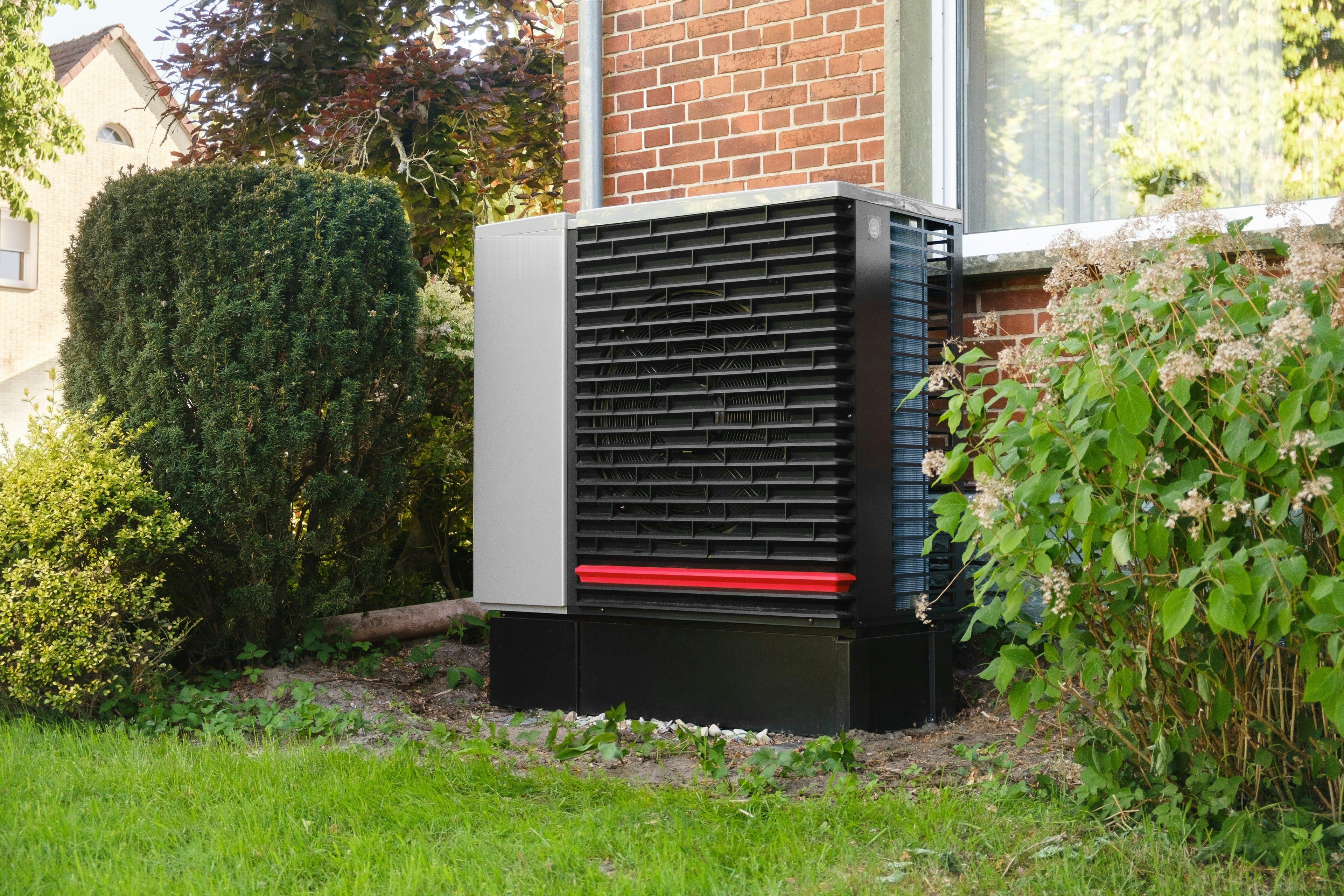
- The outdoor unit needs a spot with clearance, drainage for defrost water, and room above snow. PSEG Long Island describes modern units as generally no noisier than a household refrigerator; placement still matters next to a bedroom window or a neighbor.
- Installation quality decides performance. An oversized or undersized system, leaky ducts, or long, poorly routed line sets cost efficiency every winter.
- Rebate paperwork. The PSEG rebate needs a participating contractor, a Manual J, a pre-inspection and listed equipment, and the final amount can be lower than pre-approved if the installed equipment differs.
Decision table: which heat pump path fits your house
Find the row that describes your house. The path column is the likely path for a house in that situation; the assessment and the Manual J make the final call.
| Your house today | Likely path | Why | PSEG whole-house rebate? |
|---|---|---|---|
| Oil boiler with baseboard or radiators, no ducts | Ductless multi-zone heat pump sized for the whole house | Avoids building ductwork | Yes, if it carries 100–120% of the whole-house load |
| Central air plus an oil or gas furnace, ducts in good shape | Ducted cold-climate heat pump on the existing ducts | Reuses ducts after sealing; replaces the AC too | Yes, whole-house |
| One cold room, addition or finished attic | Single-zone ductless mini-split | Lowest cost for one space | No single-family rebate published for one room |
| Newer oil boiler you want to keep for now | Heat pump plus integrated controls, oil as backup | Lower upfront cost; oil only in extreme cold | Yes, with Mass Save-listed integrated controls; ask PSEG about Rate 580 |
| Old boiler, old tank, planning to stay | Full conversion: remove the boiler and close the tank | Ends oil deliveries and tank risk; Rate 580 eligibility is clearer | Yes |
| Drafty house, high bills, rooms that never warm up | Assessment and air sealing first, then size the heat pump | A smaller system costs less to buy and to run | Yes, once the system is sized to the new load |
| 100-amp service or a full panel | Electrical load calculation before choosing equipment | A service upgrade changes cost and timeline | Not affected |
Questions to ask before you sign a heat pump quote
A Long Island heat pump quote is complete when it answers these, in writing.
- Is the Manual J included, and was it run on the house after any air sealing and insulation?
- What is the heating capacity of the outdoor unit at 5°F, and is the model on the NEEP cold-climate list today?
- Are you a PSEG Long Island participating contractor, and who files the rebate and schedules the pre-inspection?
- Which rebate tier are you counting, and is the price shown before or after it?
- If my oil system stays, which integrated controls are you installing, and are they listed on Mass Save?
- Who closes out the oil tank, who files with the county and the building department, and who gives the oil supplier written notice?
- Is a panel or service upgrade included, and have you done a load calculation?
- What is the plan for hot water if the boiler goes?
- Will you help me apply for Rate 580 after installation?
FAQs
How much does a heat pump cost for a 2,000 square foot home on Long Island?
Published installed costs for a 2,000 square foot home range from about $12,000 (This Old House) to $10,000 to $20,000+ (HomeGuide), and Rewiring America puts whole-home systems for 1,500 to 2,500 square foot homes at $17,000 to $23,000 with a median of $19,500. New York's own program data shows medians of $14,054 for 1,500 to 2,000 square feet and $18,100 for 2,000 to 2,500 square feet, in 2017 to 2019 dollars. After PSEG Long Island's whole-house rebate, a $19,500 system nets $15,500 at market rate, $14,500 in a Disadvantaged Community or for moderate income, and $12,000 for low income.
How much is a heat pump for a 1,500 square foot house?
HomeGuide's national range for a 1,500 square foot house is $8,000 to $10,500+ for a standard 2.5-ton air-source system. NYSERDA's New York whole-house projects had a median of $11,450 for 1,000 to 1,500 square feet and $14,054 for 1,500 to 2,000 square feet (2017 to 2019 dollars). Rewiring America notes that homes in colder climates or high-labor-cost regions tend to land at the higher end of published ranges. PSEG Long Island's $4,000 to $7,500 whole-house rebate then comes off the installed price.
Is there a federal tax credit for installing a heat pump in 2026?
No. The IRS says the Energy Efficient Home Improvement Credit (25C) can be claimed for improvements made through December 31, 2025, and the Residential Clean Energy Credit (25D), which covered geothermal heat pumps, is not available for property placed in service after December 31, 2025. On Long Island the incentives that still apply to a 2026 install are PSEG Long Island's heat pump rebate and, for qualifying accounts, the Rate 580 home-heating rate.
What is the downside of having a heat pump?
The main downsides are a higher upfront cost than a like-for-like boiler, a higher electric bill that moves with PSEG Long Island's monthly Power Supply Charge, lower capacity in very cold weather (cold-climate units must still reach a coefficient of performance of 1.75 at 5°F), no heat in a power outage without backup power, outdoor unit placement, and a rebate process that requires a participating contractor, a Manual J and a pre-inspection.
How much is the PSEG Long Island heat pump rebate in 2026?
For a whole-house cold-climate heat pump in a single-family home, PSEG Long Island publishes $4,000 at market rate, $5,000 for a market-rate home in a Disadvantaged Community, $5,000 for moderate-income households (80% of area median income), and $7,500 for low-income households (60% of area median income). The system must meet 100 to 120% of the whole-house heating load by Manual J, be on the NEEP cold-climate list, use integrated controls or remove the fossil system, and be installed by a participating contractor.
Does a single ductless mini-split qualify for the PSEG Long Island rebate?
No single-family rebate is published for a one-room system. PSEG Long Island publishes its single-family heat pump rebate for whole-house projects, where the system meets 100 to 120% of the entire dwelling heating load. A multi-zone ductless system sized to heat the whole house can qualify if the other conditions are met.
How much does it cost to convert from oil heat to a heat pump on Long Island?
Adding the published ranges for a 1,500 to 2,500 square foot house (a $17,000 to $23,000 heat pump, $200 to $500 boiler removal, $500 to $2,000 basement tank removal and up to $2,500 for a panel upgrade) gives about $17,700 to $28,000 before the PSEG Long Island rebate, or about $13,700 to $24,000 after the $4,000 market-rate rebate. Hot water replacement, permits and an underground tank add to that. Keeping oil as backup costs less up front but keeps the tank and may affect Rate 580 eligibility.
Is a heat pump cheaper to run than oil on Long Island?
At the prices we checked, yes. Replacing 400 gallons of oil (EIA's estimate for oil-heated homes in the 2025–26 winter) takes about 5,756 kWh from a heat pump at the NEEP ducted minimum efficiency. That costs about $1,404 on PSEG Long Island Rate 180 or $1,129 on Rate 580, against $1,720 of oil at last winter's $4.30 Long Island average or $2,496 at September 2026's $6.24. The assumptions are an 80% efficient oil system and the October 2025 to March 2026 average Power Supply Charge.
Do I have to remove my oil tank when I switch to a heat pump?
Not always. If you keep oil as backup, the tank stays in service. If you stop using oil, New York State code requires the tank to be emptied, cleaned and either removed or properly abandoned in place, with an inspection and written notice to your oil supplier. Suffolk County's health department says fuel oil tanks do not have to be removed unless they are leaking, and residential tanks under 1,100 gallons are exempt from registration outside Article 7 zones. In Nassau County the Department of Health runs the homeowner fuel oil tank program.
About the author
Alex Lubin
Founder, EnergiSense
Alex Lubin founded EnergiSense on Long Island in 2021. EnergiSense plans solar, battery storage and home-energy upgrades for Nassau and Suffolk homes, including cold-climate heat pumps and oil-to-electric conversions, and puts each part of a project on its own line so a homeowner can see what every piece costs. This guide quotes public sources only; it does not quote an EnergiSense price.
Full founder storyNext best page
Filed under: Home Energy
Get my quote