Home Energy
Do heat pumps work in cold weather? How a heat pump heats a Long Island house in winter
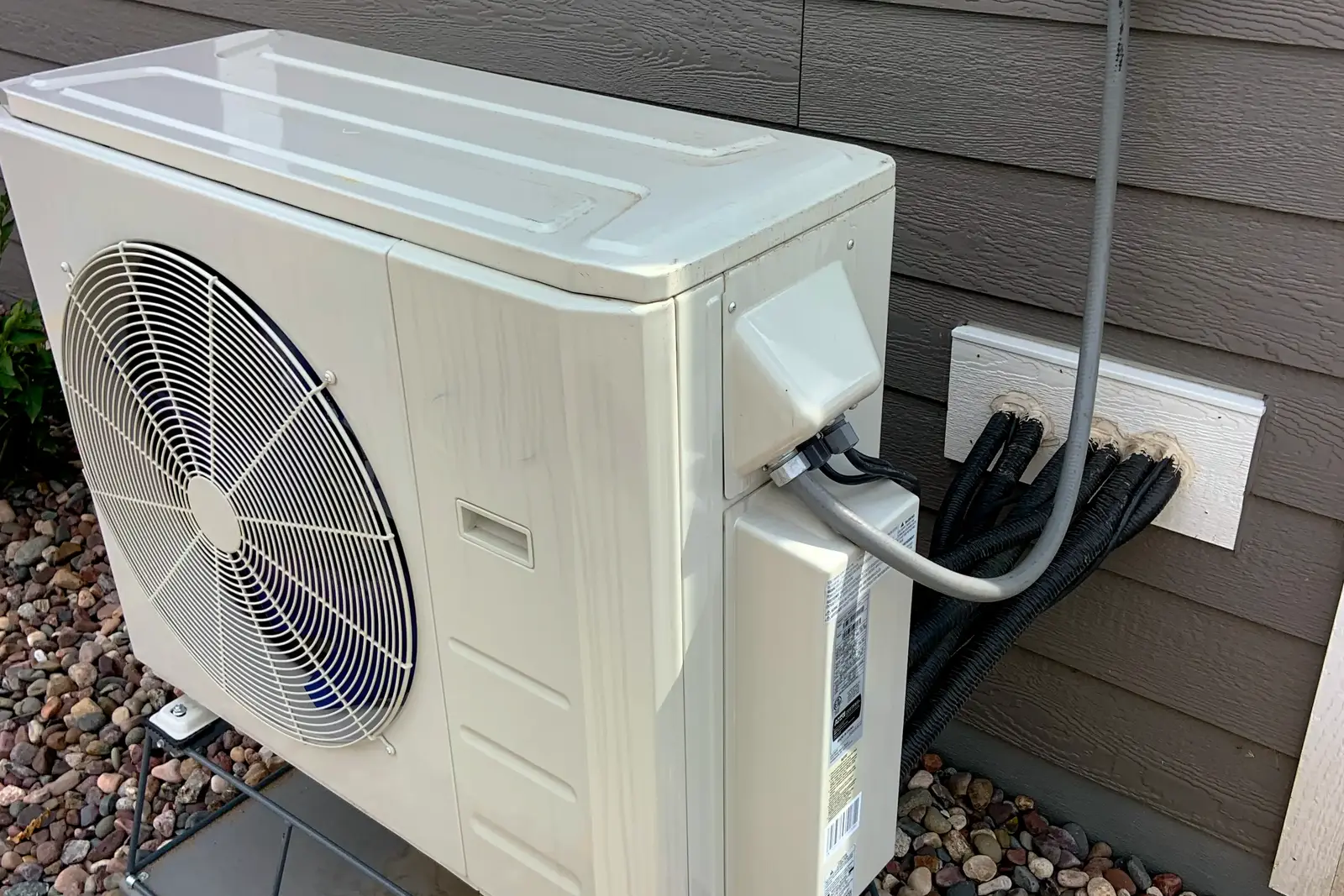
Most Long Island homeowners who look at a heat pump ask the same thing first: will it keep the house warm in January? The top Google results for "how does a heat pump work in winter" were written by contractors in Colorado and the Toronto area, or are forum threads. None of them uses Long Island temperatures, and none of them explains the rules PSEG Long Island sets for backup heat, controls and equipment.
This guide answers the question with local numbers. It explains how a heat pump makes heat from cold air, how many hours Long Island actually spends below the temperatures that matter (from NOAA's hourly record at Islip MacArthur Airport for the last three winters), how cold is too cold, what defrost mode and long run times mean, and what PSEG Long Island requires if you keep your oil or gas system as a backup. Every number is tied to a named source, read on October 15, 2026.
What this guide does not do is repeat the cost math. Installed prices, PSEG rebate tiers and the oil-versus-heat-pump winter bill are in our heat pump installation cost guide for Long Island, linked below.
The numbers, with sources
121 hours
Hourly readings below 15°F at Islip MacArthur Airport from October 2025 to April 2026, the coldest of the last three winters (42 the winter before, 0 the one before that)
NOAA NCEI Local Climatological Data, Islip (KISP)0°F
Lowest daily temperature at Islip in the last three winters, recorded on January 31, 2026
NOAA NCEI daily summaries, Islip MacArthur Airport1.75
Minimum units of heat per unit of electricity (COP) at 5°F for a heat pump on the NEEP cold-climate list, which PSEG Long Island requires for its rebate
NEEP Cold Climate ASHP Specification v4.085%
Share of the heat in 70°F (21°C) air that is still in 0°F (−18°C) air, which is why a heat pump keeps heating in winter
Natural Resources Canada — Heating and Cooling With a Heat PumpBelow 15°
When PSEG Long Island says a kept oil or gas backup should be used, if at all, with integrated controls making the heat pump the default heat
PSEG Long Island — Heat pump FAQ−15°F
Outdoor air temperature (not wind chill) at which research shows cold-climate heat pumps can still provide comfortable heat
NYS Clean Heat — Do heat pumps really work in cold climates?
How a heat pump makes heat from cold air
A heat pump does not burn anything. It moves heat that is already outside into the house. PSEG Long Island describes it simply: a heat pump is an air conditioner with a reversing valve, and in winter it runs like an air conditioner in reverse, because even winter air contains heat that can warm your home.
There is more heat out there than most people expect. Natural Resources Canada, writing for a colder country than ours, notes that air at −18°C (about 0°F) still holds 85% of the heat in air at 21°C (about 70°F). Because the electricity runs the compressor and fans instead of making the heat itself, NYS Clean Heat says modern heat pumps are three times more efficient than conventional oil, propane or electric resistance heating. Natural Resources Canada describes the heating cycle in four steps:
- Liquid refrigerant passes through an expansion device into the outdoor coil. There it absorbs heat from the outdoor air and boils into a low-temperature vapor.
- The vapor goes through the reversing valve to the compressor, which squeezes it. Compressing the vapor makes it hot.
- The hot gas flows to the indoor coil, where it gives its heat to the air in the house and condenses back into a liquid.
- The liquid returns to the expansion device and the cycle repeats. In summer the reversing valve flips the flow, and the same equipment cools the house.
How cold Long Island really gets: three winters, hour by hour
National articles talk about "cold climates" in general. Here is the record for central Long Island. We counted NOAA's routine hourly temperature readings at Islip MacArthur Airport (station KISP) for each heating season from October 1 to April 30, and took the coldest daily low and the number of days that never got above freezing from NOAA's daily summaries for the same station.
Most winter hours on Long Island are above freezing, and the temperatures that test a heat pump are rare. Even 2025–26, the coldest of the three winters, had 121 hourly readings below 15°F, about 2.5% of the season's recorded hours, and 8 below 5°F. Its coldest day was January 31, 2026, when the low reached 0°F. In 2023–24 the temperature never dropped below 15°F at all. NOAA's 1991–2020 normals for Islip put the average January low at 24.6°F and the average January temperature at 31.9°F.
Two cautions. Islip is one station in central Suffolk, so treat these counts as a guide to how often it gets that cold, not an exact count for your street. And a heat pump has to be sized for the coldest nights, not the average ones, which is why the sizing step later in this guide matters more than the brand.
| Winter (Oct 1 – Apr 30) | Hourly readings | Below 32°F | Below 20°F | Below 15°F | Below 5°F | Days with a high below 32°F | Coldest daily low |
|---|---|---|---|---|---|---|---|
| 2023–24 | 5,108 | 540 | 44 | 0 | 0 | 6 | 17°F (four days, January 2024) |
| 2024–25 | 5,084 | 925 | 162 | 42 | 0 | 8 | 7°F (January 22, 2025) |
| 2025–26 | 4,922 | 1,095 | 314 | 121 | 8 | 23 | 0°F (January 31, 2026) |
How cold is too cold for a heat pump?
There is no single cutoff. Three temperatures matter, and they are different for every house and every model.
The first is the balance point. Natural Resources Canada defines the thermal balance point as the outdoor temperature at which the heat pump's heating capacity equals the heat loss of the house. Below it, the heat pump still runs and still heats, but something else has to cover the shortfall. A tighter house and a correctly sized cold-climate unit push the balance point lower. The second is the backup line PSEG Long Island uses: if you keep your oil or gas system, PSEG says it should be used, if desired, only when temperatures are extremely low, ideally below 15°. The third is the cut-off. Natural Resources Canada says most air-source heat pumps have a minimum operating temperature, and for newer models it ranges from −15°C to −25°C, about 5°F to −13°F.
Now set those against the Islip record. In the last three winters the coldest hourly reading at Islip was 3°F and the coldest daily low was 0°F. A NEEP-listed cold-climate unit is rated at 5°F, and NYS Clean Heat says research shows cold-climate heat pumps can provide comfortable heat at −15°F, air temperature, not wind chill. So for a Long Island house the real question is not whether a heat pump works in winter. It is whether yours is sized to carry the house through the few nights below 15°F, or whether a backup will carry those nights.
| Outdoor temperature | What happens | Source |
|---|---|---|
| Above freezing (most winter hours on Long Island) | The heat pump runs at its most efficient. Near freezing, frost can form on the outdoor coil; defrost mode clears it. | NOAA Islip record; Natural Resources Canada |
| Your house's balance point (set by the house and the unit's size) | Below it, the heat pump keeps heating but can no longer cover the whole heat loss on its own. | Natural Resources Canada |
| About 15°F | PSEG Long Island's suggested switch-over point for a kept oil or gas backup, through integrated controls. | PSEG Long Island heat pump FAQ |
| 5°F | NEEP-listed cold-climate units must still deliver at least 1.75 units of heat per unit of electricity at maximum capacity. | NEEP specification v4.0 |
| 5°F to −13°F (−15°C to −25°C) | Typical minimum operating temperature for newer air-source models. Below it, a supplemental system has to heat. | Natural Resources Canada |
| −15°F | Research cited by NYS Clean Heat shows cold-climate heat pumps can still provide comfortable heat. | NYS Clean Heat |
PSEG Long Island's rules if you keep oil or gas as a backup
Many Long Island houses that switch to a heat pump keep the old boiler or furnace for the coldest nights. PSEG Long Island allows this and in fact recommends it, with conditions. Its heat pump FAQ says to keep the existing heating equipment only as a backup, linked to the heat pump by integrated controls programmed so the heat pump is the default heating system, and to use the backup only when temperatures are extremely low, ideally below 15°. PSEG says doing so helps you qualify for its whole-house heat pump rebate.
The rebate has more conditions. PSEG Long Island's heat pump rebate page requires integrated controls listed on Mass Save, or removal of the fossil fuel system; if the old system stays, the heat pump must be the primary heat and the fossil fuel secondary. The cold-climate unit must be on the NEEP list when the application is submitted. A Manual J load calculation must show the system meets 100 to 120% of the whole house's heating load. And the work must be done by one of PSEG's participating contractors. Ask any installer, including us, to show that participating status in writing before you count the rebate.
- Integrated controls switch automatically from the heat pump to the existing system at a pre-programmed set point (PSEG Long Island). Ask your installer which set point they will program, and why.
- Sizing to 100 to 120% of the whole-house load means the heat pump, not the backup, is designed to carry the house. The backup is for the rare nights below the set point.
- Rate 580: PSEG's FAQ says customers whose heat pump is the primary source of heat may be eligible for its Residential Electric Heating rate, with a 40% energy delivery charge discount on usage above 400 kWh a month from October through May. PSEG's 2026 rate sheet says the rate applies to customers who heat the entire building solely with an electric heat system. If you plan to keep oil or gas as a backup, ask PSEG Long Island in writing whether your account qualifies.
- Removing the oil system is the other path. Tank rules, removal costs and the Rate 580 question are covered on our oil-to-electric conversion page and in the cost guide.
Defrost mode: why the outdoor unit stops and clears its frost
When the outdoor temperature is near or below freezing, moisture in the air condenses and freezes on the outdoor coil. Frost blocks heat transfer, so the heat pump clears it. Natural Resources Canada describes the most common method: the reversing valve switches the unit to cooling mode, sending hot gas to the outdoor coil to melt the frost, and the outdoor fan shuts off while it happens.
That is normal operation, not a breakdown. Islip logged 540 to 1,095 hourly readings below 32°F in each of the last three winters, so expect to see defrost cycles. Natural Resources Canada says timed controls start a defrost every 30, 60 or 90 minutes, while demand-defrost controls start one only when sensors detect frost, which is more efficient. It recommends choosing a unit with demand defrost.
- What you may notice outside: the outdoor fan stops while the unit melts the frost, and water runs off the coil.
- What you may notice inside: during defrost the unit is in cooling mode, so a ducted system can blow cooler air for a while. Natural Resources Canada notes supplementary heat may be needed during defrost.
- Ask whether the indoor fan should pause during defrost. Natural Resources Canada says that setting saves energy, though defrost may take a little longer.
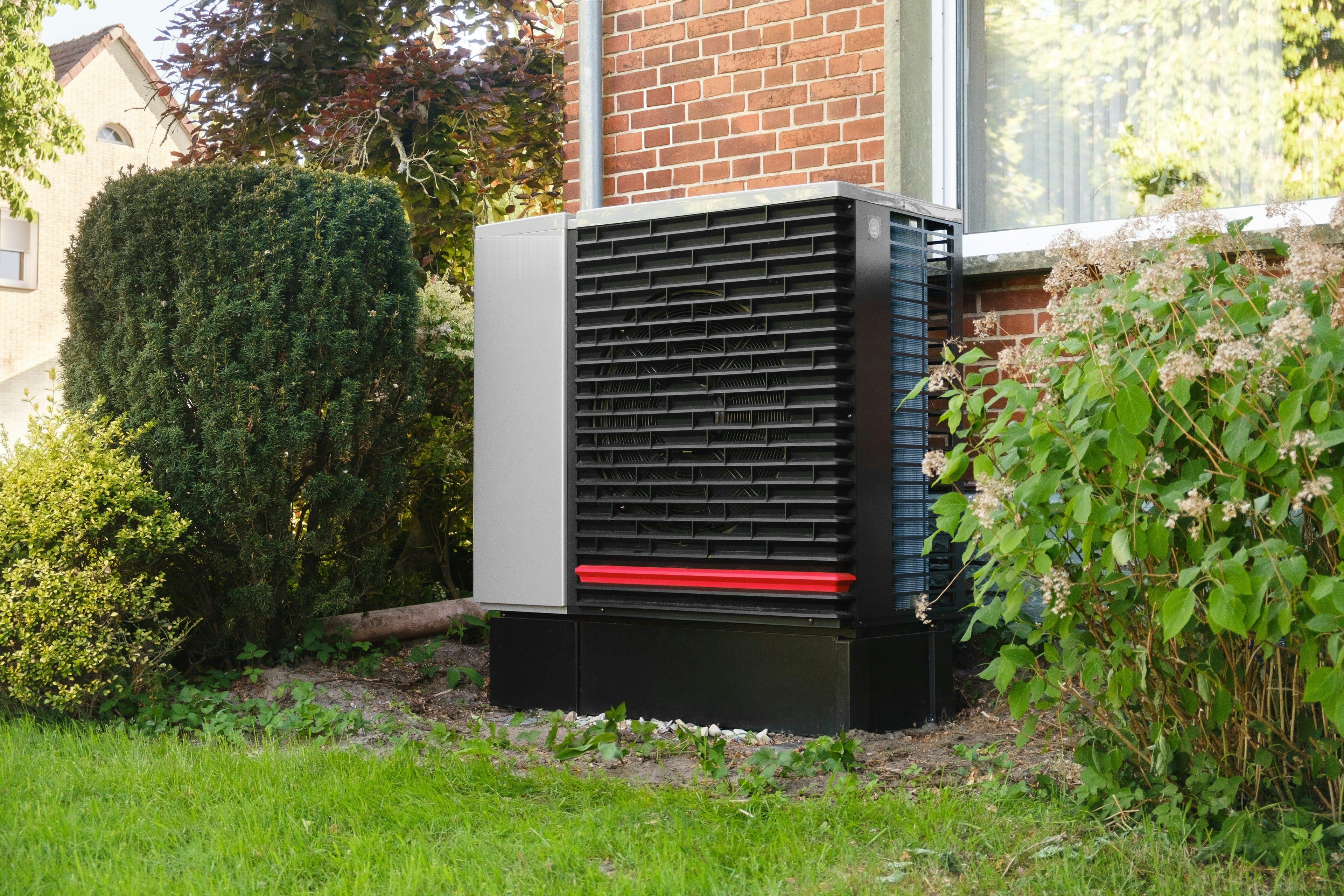
- Give the unit room above the snow and somewhere for meltwater to go. NYS Clean Heat recommends mounting outdoor units at least 18 inches above the ground on a gable side of the house.
Why a heat pump runs longer in winter, and when that is normal
If you are used to an oil boiler or a furnace, a heat pump has a different rhythm. Natural Resources Canada explains that variable-speed heat pumps vary their output to match the heating demand of the house at that moment, which keeps efficiency high, and that heat pumps respond more slowly than furnace systems. So expect long, steady run times on cold days, sometimes all night. That is the design working.
So yes, it is fine for a heat pump to run all night in winter. NYS Clean Heat's advice to owners is to find the temperature that feels comfortable, then set it and forget it. Natural Resources Canada says deep night-time setbacks work poorly with heat pumps, because they respond more slowly than furnaces; it recommends setbacks of no more than 2°C (about 3.5°F), or a smart thermostat that starts warming the house early.
- Not normal: the backup heat runs a lot. Natural Resources Canada says an undersized heat pump shows up as the supplemental heat being used more often.
- Not normal: short on-and-off cycles in mild weather. Natural Resources Canada says an oversized unit cycles on and off in warmer conditions, which costs comfort and efficiency and wears the equipment.
- Not normal: the house will not hold temperature on a day well above freezing. Above its balance point a correctly sized heat pump should carry the house on its own, so have it checked.
- If your backup is electric heat, set its thermostat 2°C to 3°C (about 3.5°F to 5.5°F) below the heat pump's set point, as Natural Resources Canada recommends, so the heat pump does most of the work.
Ducted, ductless or mini-split: which works in a Long Island winter?
All three can. A mini-split is a heat pump: one outdoor unit feeds one or more indoor heads through refrigerant lines, with no ducts. PSEG Long Island's FAQ notes that air source heat pumps come in both ducted and ductless versions to suit the existing setup of the house, and both kinds appear on NEEP's cold-climate list.
What differs is the efficiency floor NEEP sets. To be listed, a non-ducted system needs a seasonal heating efficiency (HSPF2) of at least 8.5 and a ducted system at least 7.7, and both must reach a COP of 1.75 at 5°F at maximum capacity. A house heated by a boiler through radiators or baseboard usually has no ducts, so ductless heads are the common fit there. A house with central air can often reuse its ducts once they are sealed.
- One cold room or a finished attic: a single-zone mini-split can fix it, but PSEG Long Island publishes its single-family heat pump rebate for whole-house systems that meet 100 to 120% of the heating load.
- A whole-house ductless layout needs a head, or enough capacity, for every zone that needs heat. Ask how closed-door bedrooms will stay warm.
- Ask for the outdoor unit's heating capacity at 5°F from its NEEP listing, not only its nameplate size.
How to make a heat pump work better in cold weather
Most cold-weather complaints trace back to the house, the sizing or the setup, not to the temperature. These steps come from NYS Clean Heat, Natural Resources Canada and PSEG Long Island.
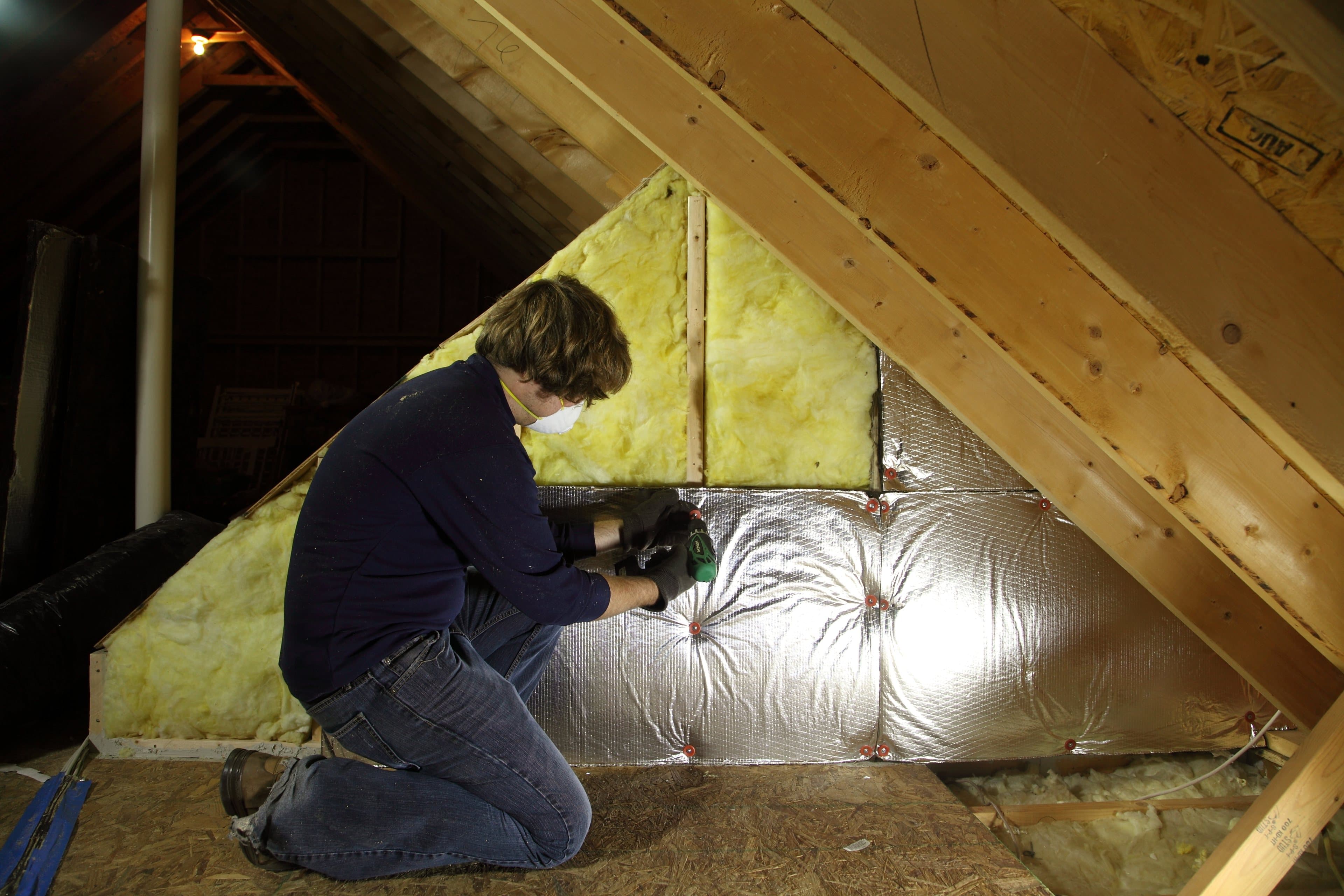
- Seal and insulate first. NYS Clean Heat recommends a home energy assessment and fixing air sealing and insulation before a heat pump is sized, because a tighter house can be heated with smaller, less expensive equipment that also runs more efficiently.
- Size it by Manual J, not by the old boiler. PSEG Long Island requires a Manual J for the whole-house rebate, and Natural Resources Canada warns that undersized units lean on backup heat while oversized ones short-cycle.
- Choose a NEEP-listed cold-climate model and ask for its capacity at 5°F.
- Mount the outdoor unit at least 18 inches above the ground on a gable side of the house (NYS Clean Heat), and keep snow cleared from around it.
- Program integrated controls so the heat pump is the default and the backup runs only in extreme cold, ideally below 15° (PSEG Long Island).
- Keep setbacks small, 2°C (about 3.5°F) or less, or use a smart thermostat that recovers early (Natural Resources Canada).
- Clean the indoor filters when the indicator light comes on or they look dirty, and book maintenance at the interval the manufacturer recommends; NYS Clean Heat says most are every one to two years.
The real disadvantages of a heat pump in a cold climate
A heat pump has trade-offs, and a cold climate sharpens some of them. Here they are in plain terms.
- Output falls as it gets colder. Natural Resources Canada says a heat pump's ability to absorb heat drops with the outdoor temperature, so the unit has to be sized for your coldest nights or paired with a backup.
- Defrost uses energy. Natural Resources Canada notes that unnecessary defrost cycles reduce seasonal performance, which is why demand defrost matters.
- No power, no heat. NYS Clean Heat points out that furnaces and boilers also stop in an outage because they need electricity for fans and pumps, that a well-insulated, air-sealed house holds warmth for hours, and that solar with battery storage can power critical loads like heat during a grid outage.
- Your electric bill goes up as your oil or gas bill goes away. Whether you come out ahead depends on fuel prices and your PSEG Long Island rate; our cost guide runs those numbers.
- Rebate paperwork: a participating contractor, a Manual J, NEEP-listed equipment and a pre-inspection, which PSEG Long Island says verifies the energy savings calculations that set the rebate.
- Noise is a smaller issue than it was. PSEG Long Island says today's units are generally no noisier than a household refrigerator, though placement next to a bedroom window still deserves thought.
Is a heat pump cheaper to run than electric heat, oil or an air conditioner?
Compared with electric baseboard or other resistance heat, yes. NYS Clean Heat says the cost of heating with a heat pump is less than electric resistance, and less than oil or propane too, because the electricity moves heat instead of making it. NYSERDA's field studies, as summarized by Clean Heat, found that homeowners coming from electric resistance heat and delivered fuels save the most, and that the savings depend on using the heat pump first, ahead of the fossil fuel system.
Against oil on Long Island, the answer depends on the price of oil and your PSEG Long Island rate, so we keep that math in one place. Our heat pump installation cost guide works it through for a 400, 600 and 800 gallon house on Rate 180 and Rate 580, with every assumption shown.
As for an air conditioner: a heat pump is an air conditioner with a reversing valve (PSEG Long Island), so in summer it cools the same way. NYS Clean Heat says heat pumps are more affordable to run than a window air conditioner in summer. The difference is that a heat pump also heats.
Questions to ask before a heat pump heats your house this winter
A heat pump plan for a Long Island house is complete when it answers these, in writing.
- Is the model on the NEEP cold-climate list today, and what is its heating capacity at 5°F?
- Was the Manual J run on the house after any air sealing and insulation, and does the system meet 100 to 120% of the whole-house heating load?
- If my oil or gas system stays, what set point will the integrated controls use, and are they listed on Mass Save?
- Does the unit use demand defrost, and where will the meltwater go?
- How high will the outdoor unit sit, and on which side of the house?
- Are you a PSEG Long Island participating contractor? Please show it in writing.
- Will my account qualify for Rate 580 if I keep a backup system?
FAQs
How cold is too cold for a heat pump to work?
It depends on the model and the house. Natural Resources Canada says newer air-source heat pumps have a minimum operating temperature between −15°C and −25°C (about 5°F to −13°F), and NYS Clean Heat says research shows cold-climate models can still provide comfortable heat at −15°F. Long Island rarely gets near that: the coldest hourly reading at Islip MacArthur Airport in the last three winters was 3°F, and the coldest daily low was 0°F on January 31, 2026.
At what temperature does a heat pump become useless?
A cold-climate heat pump does not stop being useful at one temperature; its output and efficiency fall gradually as it gets colder. NEEP-listed models must still deliver at least 1.75 units of heat per unit of electricity at 5°F. The practical limit for a house is its balance point, the outdoor temperature below which the heat pump can no longer cover the house's heat loss on its own (Natural Resources Canada), plus the unit's minimum operating temperature.
Do heat pumps work in cold weather on Long Island?
Yes. NOAA's hourly readings at Islip show 0, 42 and 121 hours below 15°F in the last three winters, and NEEP-listed cold-climate units are rated to keep heating efficiently at 5°F. PSEG Long Island recommends keeping an existing system only as a backup for extreme cold, ideally below 15°, with integrated controls making the heat pump the default heat.
How does a heat pump work in winter?
It runs like an air conditioner in reverse. Refrigerant in the outdoor coil absorbs heat from the outdoor air and boils into a vapor, the compressor squeezes the vapor so it gets hot, the indoor coil releases that heat into the house, and the refrigerant condenses back to a liquid and repeats the cycle. Air at about 0°F still holds 85% of the heat in 70°F air, according to Natural Resources Canada, so there is heat to collect even in January.
What is the 20 degree rule for heat pumps?
It is a rule of thumb that circulates online, not a standard. Neither PSEG Long Island's heat pump FAQ nor NEEP's cold-climate specification uses it. What decides whether a heat pump keeps up in winter is its capacity at low temperatures (NEEP rates cold-climate units at 5°F) and your house's balance point, the outdoor temperature below which the heat pump can no longer cover the heat loss on its own.
Is it okay for a heat pump to run all night in winter?
Yes. Variable-speed heat pumps match their output to the house's heating demand, so long run times on cold nights are normal (Natural Resources Canada). NYS Clean Heat advises owners to set a comfortable temperature and leave it. Constant running is a concern only if the backup heat is also running a lot, which can mean the unit is undersized.
Do heat pumps require ductwork?
No. PSEG Long Island notes that air source heat pumps come in ducted and ductless versions. Houses with radiators or baseboard and no ducts usually use ductless mini-split heads; houses with central air can often use a ducted heat pump on sealed existing ducts. Both kinds appear on the NEEP cold-climate list.
Are heat pumps noisy?
Less than they used to be. PSEG Long Island says today's units are generally no noisier than a household refrigerator, and Natural Resources Canada says most heat pumps have a sound rating of 76 dB or lower. Placement still matters, so keep the outdoor unit away from bedroom windows where you can.
Is a heat pump cheaper than electric heat?
Yes. NYS Clean Heat says heating with a heat pump costs less than electric resistance heat such as baseboard, and less than oil or propane, because a heat pump moves heat rather than making it from electricity. It describes modern heat pumps as three times more efficient than conventional oil, propane or electric resistance heating.
Should I keep my oil boiler as a backup?
PSEG Long Island recommends it, with integrated controls that make the heat pump the default and use the backup only in extreme cold, ideally below 15°, and says doing so helps you qualify for its whole-house rebate. The trade-off is that you keep the tank and may not qualify for Rate 580, which PSEG's 2026 rate sheet describes as a rate for buildings heated solely with electric heat. Ask PSEG Long Island in writing before you decide.
Do mini-split heat pumps work in cold weather?
Yes, if they are cold-climate models. NEEP lists ductless systems that reach a heating efficiency of HSPF2 8.5 or better and a COP of at least 1.75 at 5°F, and PSEG Long Island requires a NEEP listing for its rebate. A single-zone unit heats one area; a whole-house layout needs enough heads and capacity for every zone.
About the author
Alex Lubin
Founder, EnergiSense
Alex Lubin founded EnergiSense on Long Island in 2021. EnergiSense plans cold-climate heat pump, insulation, air sealing, solar and battery projects for Nassau and Suffolk homes. This guide is built from NOAA weather records for Islip and from PSEG Long Island, NYS Clean Heat, NEEP and Natural Resources Canada pages read on October 15, 2026. It quotes no EnergiSense price and does not state any contractor's PSEG program status.
Full founder storyNext best page
Filed under: Home Energy
Get my quote