Incentives
Suffolk County Solar Incentives: 2026 Homeowner Guide
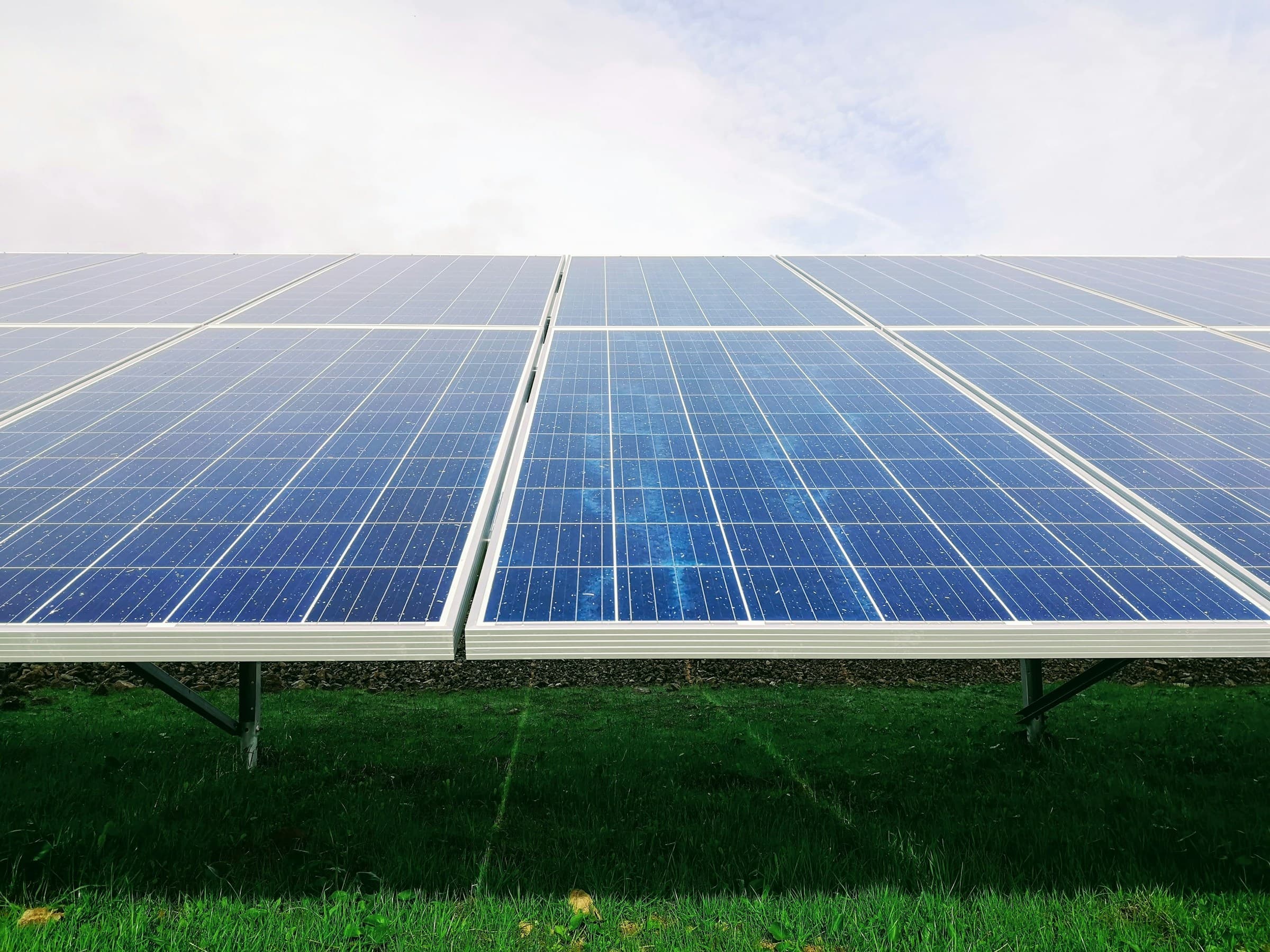
Suffolk County is one of the strongest residential solar markets in New York. PSEG Long Island's rate base puts Suffolk homeowners on the high-rate side of the EIA national distribution, and almost every Suffolk town has the roof, sun, and orientation profile to make solar work. The incentive stack here is real, but it is not the same stack a Brooklyn or Westchester homeowner uses, and most national calculators flatten the differences.
This guide walks through the five-lever Suffolk County stack in 2026, the town-by-town RPTL 487 reality, PSEG Long Island's role in the savings model, and the practical questions a Suffolk homeowner should ask before signing any proposal. EnergiSense installs in Brookhaven, Islip, Smithtown, Babylon, Huntington, Riverhead, the East End townships, and Shelter Island. The patterns below are what we actually see, not what a national database guesses.
A note on the federal credit: the Residential Clean Energy Credit (IRS section 25D) rules changed after 2025. Throughout this article, the federal credit is treated conservatively — verify the current percentage and rules with your CPA against the IRS Form 5695 instructions for your placed-in-service tax year. Do not let any Suffolk installer hard-code a 2026 federal percentage without that verification.
The numbers, with sources
PSEG LI
PSEG Long Island is the electric utility for Nassau and Suffolk Counties. Net metering tariff and interconnection process apply across Suffolk.
PSEG Long Island — Solar and Renewables25% / $5,000
NY State Solar Energy System Equipment Credit (NY Tax Law 606(g-1)) on primary residence qualified expenditures, capped at $5,000.
NYS Department of Taxation and Finance — Form IT-255NY-Sun LIPA
NY-Sun Megawatt Block — Long Island (LIPA) region applies to Suffolk and Nassau projects. Per-watt incentive flows through the participating installer.
NYSERDA — NY-Sun Dashboards15 years
NY Real Property Tax Law section 487 — 15-year exemption from added assessed value of solar equipment, locally adoptable. Verify your Suffolk town has not opted out.
NY Senate — RPTL 48722–28 ¢/kWh
New York residential electricity price band per EIA Electric Power Monthly — Suffolk falls in the high-rate part of the national distribution.
EIA — Electric Power Monthly Table 5.6.A
The five-lever Suffolk County stack
Every Suffolk County residential solar proposal in 2026 should explicitly model these five levers. If any of them is missing or unexplained on a proposal you receive, that is the question to ask before signing.
| Lever | Applies in Suffolk? | Mechanism | Common mistake |
|---|---|---|---|
| Federal Residential Clean Energy Credit (IRC 25D) | Yes — verify with CPA | Tax credit on qualified expenditures, IRS Form 5695 | Assuming a flat percentage without IRS Form 5695 verification for placed-in-service year |
| NY State 25% credit (NY Tax Law 606(g-1)) | Yes | 25% of qualified expenditures on primary residence, capped at $5,000, NY Form IT-255 | Ignoring the $5,000 cap on larger systems |
| NY-Sun LIPA Megawatt Block | Yes — Long Island region | Per-watt incentive flowed through participating installer at project level | Quoting yesterday's block rate; not naming the active block |
| PSEG Long Island net metering | Yes | Bill credit on exported energy under the applicable PSEG tariff | Assuming 1:1 retail-rate offset on every kWh |
| RPTL 487 property tax exemption | Depends on Suffolk town — confirm | 15-year exemption from added assessed value | Assuming every Suffolk town opted in — verify with local assessor |
PSEG Long Island: the utility lens for Suffolk projects
Every Suffolk County solar proposal is built around PSEG Long Island. The PSEG net metering tariff determines how exported solar energy is credited to your bill, and the PSEG interconnection process determines how the system is connected, inspected, and turned on.
The practical implication is that the proposal economics depend on how the installer modeled the PSEG tariff. A proposal that uses a generic 1:1 retail-rate offset on every exported kWh can overstate Suffolk savings if the actual PSEG schedule is different. Ask which PSEG tariff was modeled, when it applies, and what happens if the system overproduces month-to-month.
Town-by-town RPTL 487 in Suffolk
RPTL section 487 provides a 15-year exemption from the added assessed value of solar electric generating equipment in New York. The exemption is locally adoptable, meaning each municipality decides whether to honor it. Suffolk has 10 towns and a number of incorporated villages, and the RPTL 487 status can vary.
Before signing any Suffolk solar proposal, contact your town assessor to confirm RPTL 487 status for your jurisdiction. The questions are simple: has the town opted out of the RPTL 487 exemption? If not, what is the application process for solar properties? When does the 15-year exemption begin?
- Town of Brookhaven — confirm with Brookhaven assessor
- Town of Islip — confirm with Islip assessor
- Town of Smithtown — confirm with Smithtown assessor
- Town of Babylon — confirm with Babylon assessor
- Town of Huntington — confirm with Huntington assessor
- Town of Riverhead — confirm with Riverhead assessor
- Town of Southampton — confirm with Southampton assessor
- Town of East Hampton — confirm with East Hampton assessor
- Town of Southold — confirm with Southold assessor
- Town of Shelter Island — confirm with Shelter Island assessor
What a strong Suffolk solar proposal shows
A proposal that protects the Suffolk homeowner separates each lever clearly and names assumptions plainly. A vague bundled-savings number is the opposite of that.
- System size (kW DC) sized to your last 12 months of PSEG bills, not a generic 12 kW default.
- Modeled annual production using site-specific shading, orientation, and roof plane analysis.
- PSEG Long Island net metering tariff named and applied to the production model.
- NY-Sun LIPA block named with current dollar-per-watt rate.
- NY State 25% credit shown with the $5,000 cap reflected.
- Federal credit treated conservatively, citing IRS Form 5695 placed-in-service tax year.
- RPTL 487 status for your specific Suffolk town confirmed.
- Roof condition assessment included separately from the solar scope.
- Battery storage shown as a separate decision with its own ROI math, not bundled by default.
Roof condition is part of the Suffolk math
Suffolk has a mix of housing stock. Long-tenured South Shore homes, North Shore homes with steeper pitches, East End properties with varied roofing systems, and post-Sandy reconstructions are all in the service area. The roof under the panels matters for the worth-it answer.
For shingle roofs under five years old, solar-only is usually clean. For shingle roofs in the 5–15 year range, an honest inspection is required before the solar layout is finalized. For shingle roofs above 15 years or showing wear, a bundled roof-and-solar plan is usually cheaper than two separate projects done in the wrong order — the roof should always come first in a bundle.
Battery storage in Suffolk
Battery storage on Long Island can be reviewed for Suffolk homeowners. The case is strongest for properties with frequent outages, time-varying usage, qualifying storage incentives, or planned near-term load growth from EV charging or electrification. It is generally weakest for short-tenure homeowners on stable grids whose only argument is generic future-proofing.
EnergiSense reviews battery storage as a separate decision, not as an automatic add to the solar package. The Tesla Powerwall 3 and Enphase IQ Battery 5P are the two we typically discuss with Suffolk homeowners.
FAQs
What solar incentives are available in Suffolk County in 2026?
Suffolk homeowners can typically stack five levers: the federal Residential Clean Energy Credit (IRC 25D, verify with your CPA), the NY State Solar Energy System Equipment Credit (25% of qualified expenditures capped at $5,000, NY Form IT-255), the NY-Sun LIPA-region Megawatt Block incentive (per-watt, flowed through the participating installer), PSEG Long Island net metering on exported energy, and the RPTL 487 15-year property tax exemption (confirm your specific Suffolk town has not opted out). The NYC SEGS abatement does not apply in Suffolk — that is borough-only.
Does the NYC solar property tax abatement apply in Suffolk County?
No. The NYC SEGS abatement (NYC Admin Code 11-2902) is exclusive to the five boroughs of New York City. Suffolk County uses the state-level RPTL 487 path instead — a 15-year exemption from added assessed value of solar equipment, subject to your town having not opted out.
What is the NY-Sun LIPA region?
NY-Sun is split into three regions, and the LIPA region covers Long Island — both Nassau and Suffolk Counties. Suffolk projects are eligible for the NY-Sun LIPA region Megawatt Block incentive, a per-watt rate that flows through your participating contractor at the project level. The rate depends on the active block when the installer files your reservation.
How does PSEG Long Island net metering work for Suffolk solar?
PSEG Long Island operates the electric system across Nassau and Suffolk. Their net metering tariff governs how exported solar energy is credited to your bill. Your installer should name the PSEG tariff used in the proposal, model your annual production against your bill, and explain what happens when monthly production exceeds usage. A generic 1:1 retail-rate assumption on every exported kWh can overstate savings if the actual PSEG schedule differs.
Do I have to verify RPTL 487 with my Suffolk town?
Yes. RPTL section 487 is a state-level 15-year exemption from added assessed value of solar equipment, but it is locally adoptable. Each Suffolk town can opt out. Before signing a proposal, contact your town's assessor to confirm the exemption applies in your jurisdiction and ask what application is required.
Should I get a battery with my Suffolk solar project?
Battery storage is a separate decision. It strengthens the case for properties with frequent outages, time-varying utility schedules, qualifying storage incentives, or planned EV or electrification load. It is usually not justified for short-tenure homeowners on a stable grid whose only argument is generic future-proofing. EnergiSense reviews battery as its own ROI question, not an automatic add to the solar package.
What is the federal solar tax credit in 2026?
The federal Residential Clean Energy Credit (IRC section 25D) applies to qualifying residential solar installations. The percentage and rules for systems placed in service in 2026 depend on current federal law. The authoritative source is the IRS Form 5695 instructions for the placed-in-service tax year. Verify with a CPA before any installer hard-codes a percentage into your Suffolk proposal.
Does EnergiSense install in all Suffolk towns?
EnergiSense installs across Suffolk County, including Brookhaven, Islip, Smithtown, Babylon, Huntington, Riverhead, the East End townships of Southampton, East Hampton, and Southold, and Shelter Island. Each town has its own permitting friction and assessor process, and we coordinate the local filing during the project.
About the author
Alex Lubin
Founder, EnergiSense — Long Island residential installer since 2021
- NABCEP PV Installation Professional
- GAF Master Elite (top 2% of US roofers)
- NYSERDA participating contractor
I install in Suffolk County most weeks. The incentive stack here is the same as Nassau on the state and federal levers, but the towns are not — RPTL 487 status, permitting friction, and roof conditions vary across Brookhaven, Islip, Smithtown, Babylon, Huntington, Riverhead, and the East End.
Full founder storyNext best page
Filed under: Incentives
Get my quote