Incentives
Hudson Valley Solar Incentives: 2026 Homeowner Guide (Central Hudson, NYSEG, O&R)
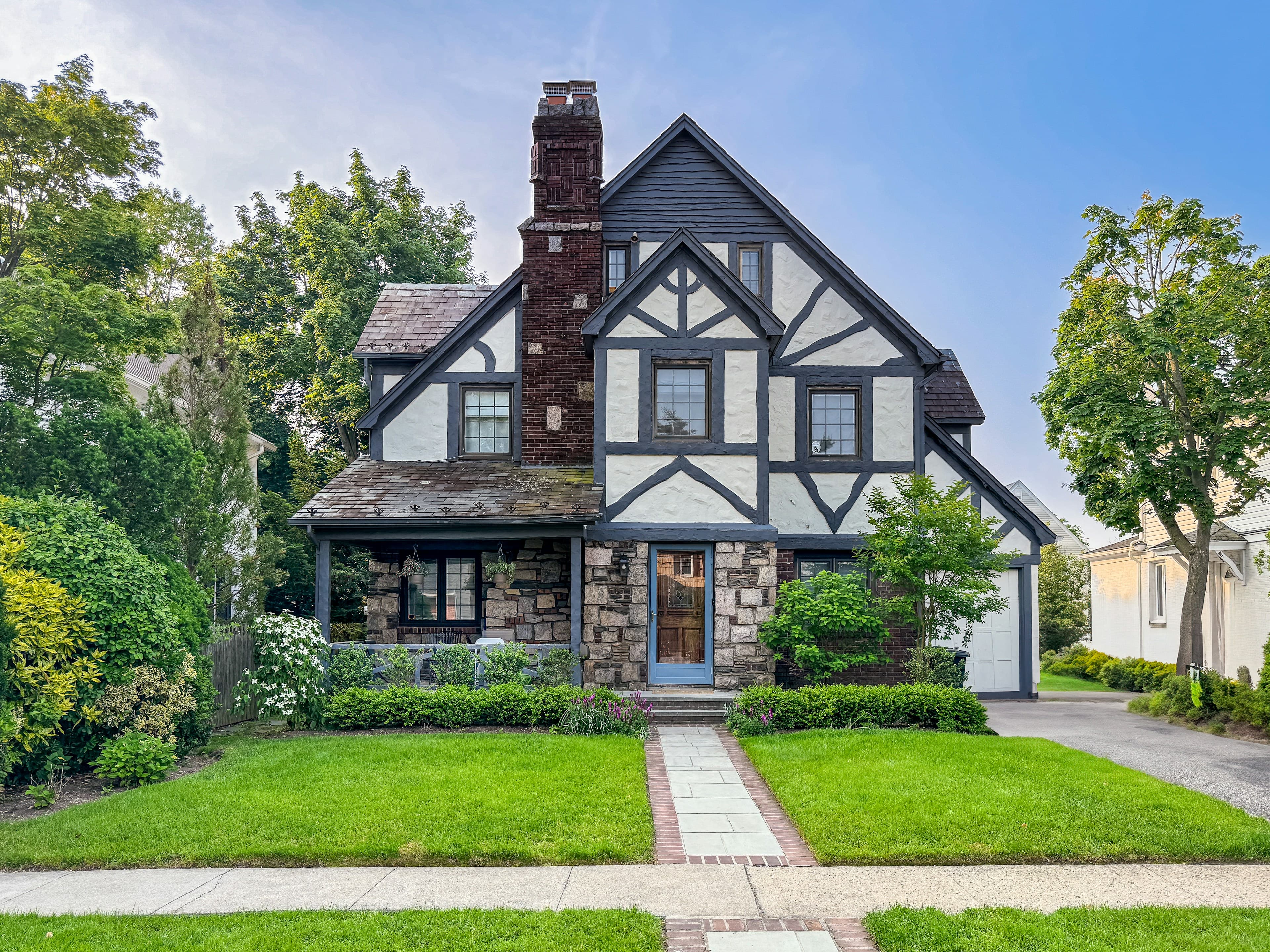
Hudson Valley solar is its own market. Three different utilities (Central Hudson, NYSEG, Orange & Rockland) serve different parts of the region. Tree cover and shade variability are higher than on Long Island. Winters are longer than NYC. Roof stock is varied — older Hudson Valley homes, newer suburban subdivisions, and rural properties with ground-mount potential are all in scope. The incentive stack is the same on the state and federal levers as the rest of NY, but the utility lever and the RPTL 487 town-by-town reality is where the proposal actually has to do the work.
This guide walks through the 2026 stack for Hudson Valley counties: Orange, Ulster, Dutchess, Putnam, Rockland, Sullivan, Greene, and Columbia. It names the three utilities, the NY-Sun Upstate-region rate context, and the proposal questions that protect Hudson Valley homeowners from generic national-calculator math that misses the local reality.
The federal credit is treated conservatively throughout this article: verify the current percentage and rules with your CPA against the IRS Form 5695 instructions for your placed-in-service tax year. Do not let any Hudson Valley installer assume a 2026 federal percentage without that verification.
The numbers, with sources
3 utilities
The Hudson Valley is served by Central Hudson Gas & Electric, NYSEG, and Orange & Rockland Utilities — three different utilities with three different net metering schedules.
NY Department of Public Service — Utility MapNY-Sun Upstate
NY-Sun Megawatt Block — the Upstate region covers everything in NY State outside of NYC, Westchester, Nassau, and Suffolk. Hudson Valley falls in the Upstate region.
NYSERDA — NY-Sun Dashboards25% / $5,000
NY State Solar Energy System Equipment Credit — 25% of qualified expenditures on primary residence, capped at $5,000.
NYS Department of Taxation and Finance — Form IT-25515 years
NY Real Property Tax Law section 487 — 15-year exemption from added assessed value of solar equipment, locally adoptable. Verify your Hudson Valley town has not opted out.
NY Senate — RPTL 487IRC §25D
Federal Residential Clean Energy Credit on qualified expenditures. Verify current percentage and rules with your CPA against IRS Form 5695 for placed-in-service tax year.
IRS — Residential Clean Energy Credit
The three Hudson Valley utilities
The first thing a Hudson Valley solar proposal needs to get right is the utility. Three serve the region, and their net metering schedules, interconnection processes, and rate cases differ. The system size, production model, and savings math should all be referenced against the specific utility for your address.
| Utility | Typical coverage | Project context | What to verify in the proposal |
|---|---|---|---|
| Central Hudson Gas & Electric | Most of mid-Hudson — Ulster, Dutchess, parts of Orange, Greene, Columbia, Putnam, Sullivan | Mixed rural, suburban, older housing stock; tree cover variable | Central Hudson net metering tariff modeled against last 12 months of bills |
| NYSEG (New York State Electric & Gas) | Parts of the Hudson Valley including portions of Sullivan, Columbia, parts of Greene | Rural and suburban; variable rate structure | NYSEG net metering / VDER schedule applied to your interconnection |
| Orange & Rockland (O&R) | Orange County (most), Rockland County, parts of Sullivan | Closer-in suburbs to NYC; mixed roof stock | O&R net metering tariff modeled; VDER framework where applicable |
The five-lever Hudson Valley stack
Every Hudson Valley solar proposal in 2026 should explicitly model these five levers. The state and federal levers do not change with utility, but the utility lever and the RPTL 487 lever vary by jurisdiction.
- Federal Residential Clean Energy Credit (IRC 25D) — verify percentage and rules with CPA against IRS Form 5695 for placed-in-service year.
- NY State 25% Solar Energy System Equipment Credit (NY Tax Law 606(g-1)) — capped at $5,000, NY Form IT-255.
- NY-Sun Upstate-region Megawatt Block — per-watt incentive flowed through participating installer; ask which block and rate.
- Utility net metering — Central Hudson, NYSEG, or O&R, depending on your address. Tariff named and modeled in proposal.
- RPTL section 487 — 15-year exemption from added assessed value of solar equipment. Confirm with your local Hudson Valley town assessor.
Hudson Valley counties and the RPTL 487 reality
RPTL 487 is locally adoptable. Hudson Valley towns vary in their adoption status. Before signing, contact your town's assessor to confirm the exemption applies and ask what application is required.
| County | Typical utility | RPTL 487 verification |
|---|---|---|
| Orange | O&R (most), some Central Hudson | Confirm with town assessor |
| Ulster | Central Hudson | Confirm with town assessor |
| Dutchess | Central Hudson | Confirm with town assessor |
| Putnam | NYSEG (parts), Central Hudson (parts) | Confirm with town assessor |
| Rockland | O&R | Confirm with town assessor |
| Sullivan | NYSEG / O&R / Central Hudson (varies) | Confirm with town assessor |
| Greene | Central Hudson / NYSEG | Confirm with town assessor |
| Columbia | Central Hudson / NYSEG | Confirm with town assessor |
Shade, tree cover, and roof orientation
Hudson Valley properties have meaningfully more tree cover and shade variability than typical Long Island or NYC sites. A site-specific shading and orientation analysis is more important here than in any other NY region. Trimming, removal, and seasonal sun-angle modeling are part of the design conversation, not afterthoughts.
For rural Hudson Valley properties with ground-mount potential, the racking decision opens up. Ground-mount systems can be sized to actual usage without roof-area constraint, and they can be oriented for ideal solar exposure independent of building roof planes. The tradeoff is more permitting, more excavation, and more land use to plan around.
Snow load and winter production
Hudson Valley winters bring real snow load and meaningful winter shading from low sun angles. Solar panels are typically rated to handle significant snow load under UL 61730 / IEC 61215, and most pitched-roof installations self-shed within a few days of accumulation. The production loss across the snowiest two to four months is real but predictable.
A Hudson Valley proposal should model annual production using a real shading and orientation analysis, not a flat assumption. A system sized correctly against the annual bill should still hit its target on a 25-year basis even with seasonal winter dips.
Battery storage in the Hudson Valley
Battery storage is a real Hudson Valley discussion. Outages from storms are more common in rural and forested parts of the region. Tesla Powerwall 3 and Enphase IQ Battery 5P are the two we typically discuss with Hudson Valley homeowners. The case is strongest for properties with frequent outages, time-varying usage, qualifying storage incentives, or planned EV / electrification load.
EnergiSense reviews battery as a separate decision. It is not bundled by default. The right battery plan starts with the backup goal and the outage history, not the brand name.
Roof condition and the bundle decision
Hudson Valley homes range from new construction to centuries-old structures. The roof under the panels matters for the worth-it answer. For shingle roofs under five years old, solar-only is usually clean. For shingle roofs 5 to 15 years old, an honest inspection comes before the solar layout. For shingle roofs above 15 years or showing wear, a bundled roof-and-solar plan with the roof first is usually cheaper than two separate projects.
FAQs
What solar incentives apply in the Hudson Valley in 2026?
Hudson Valley homeowners typically stack five levers: the federal Residential Clean Energy Credit (IRC 25D, verify with CPA), the NY State 25% credit (capped at $5,000, NY Form IT-255), the NY-Sun Upstate-region Megawatt Block incentive (flowed through participating installer), net metering under your utility — Central Hudson, NYSEG, or Orange & Rockland — and the RPTL 487 15-year property tax exemption (confirm your town).
Does the NYC solar property tax abatement apply in the Hudson Valley?
No. The NYC SEGS abatement (NYC Admin Code 11-2902) is exclusive to the five boroughs of New York City. Hudson Valley homeowners use the state-level RPTL 487 path instead.
Which utility serves my Hudson Valley address?
It depends on county and town. Central Hudson Gas & Electric serves most of Ulster and Dutchess and parts of Orange, Greene, Columbia, and Putnam. NYSEG serves portions of Sullivan, Columbia, and Greene. Orange & Rockland serves most of Orange and Rockland and parts of Sullivan. Confirm your utility before any solar proposal — the net metering tariff in the proposal depends on it.
What is the NY-Sun Upstate region?
NY-Sun is split into three regions. The Upstate region covers everything in NY State outside of NYC, Westchester, Nassau, and Suffolk Counties. Hudson Valley falls in the Upstate region. The Upstate Megawatt Block has its own block schedule and dollar-per-watt rate, which can differ from the LIPA or ConEd region rates.
Will snow loss kill my Hudson Valley solar economics?
No, if the system is sized correctly. Hudson Valley winters do reduce production for a few months, but solar panels typically self-shed snow within days of accumulation and the annual production model already accounts for seasonal variation. A properly sized 25-year system should still hit its target on an annual basis.
Is battery storage worth it in the Hudson Valley?
Often yes for properties with frequent outages, qualifying storage incentives, planned EV / electrification load, or time-varying utility usage. Often not for short-tenure homeowners on stable grids whose only argument is generic future-proofing. EnergiSense reviews battery as a separate decision with its own ROI math.
Can I install a ground-mount solar system in the Hudson Valley?
Yes, for properties with the land, the local zoning permission, and a viable interconnection path. Ground-mount systems are sized independent of roof area and can be oriented for ideal solar exposure. The tradeoff is more permitting, more excavation, and more land use.
What is the federal solar tax credit in 2026?
The federal Residential Clean Energy Credit (IRC section 25D) applies to qualifying residential solar installations. The percentage and rules for systems placed in service in 2026 depend on current federal law. Verify with a CPA against IRS Form 5695 instructions for your placed-in-service tax year before any Hudson Valley installer hard-codes a percentage.
About the author
Alex Lubin
Founder, EnergiSense — Hudson Valley installer (Orange, Dutchess, Ulster, Putnam)
- NABCEP PV Installation Professional
- GAF Master Elite (top 2% of US roofers)
- NYSERDA participating contractor
Hudson Valley solar is not a copy of Long Island solar. Three different utilities, different net metering math, more shade and tree variability, longer winters, and a different NY-Sun region. I wrote this guide so homeowners in Orange, Ulster, Dutchess, Putnam, Rockland, Sullivan, Greene, and Columbia walk into a quote knowing what should be on it.
Full founder storyNext best page
Filed under: Incentives
Get my quote