Solar
Solar panels on a flat roof: leaks, weight, tilt, and warranty
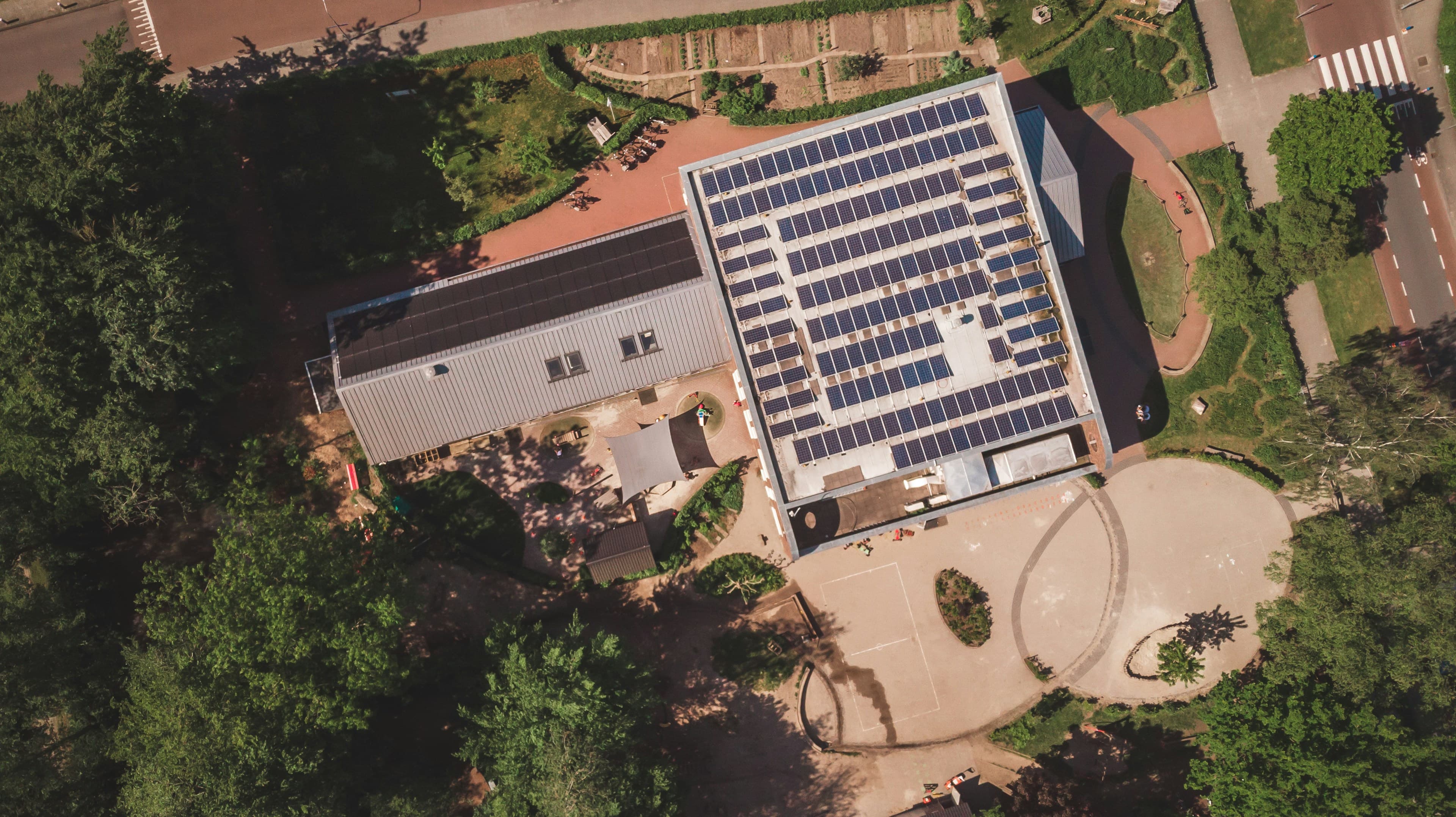
Flat-roof solar in New York is a different engineering problem than pitched-roof solar. A typical Brooklyn rowhouse, Queens flat-roof multifamily, or commercial low-slope building cannot be designed with the standard rail-on-shingle playbook. Four specific risks come up on every flat-roof project: leaks, weight, tilt, and warranty.
Each one is solvable with the right design. None of them are solvable by ignoring the roof type and pretending a flat roof is just a "different angle."
This guide walks through what each risk actually is, how it shows up if mismanaged, and how EnergiSense designs around it.
The numbers, with sources
2.5–5 lb/ft²
Typical ballasted flat-roof solar dead load on the membrane
NREL Best Practices for Commercial PV5–15°
Typical flat-roof PV tilt angle (balances production, wind uplift, and inter-row shading)
NREL Solar PV System Design GuideASCE 7
Governing US wind-load standard for rooftop PV uplift design
American Society of Civil Engineers — ASCE 715–30 yrs
Flat-roof membrane service life (TPO, EPDM, PVC, modified bitumen — varies)
National Roofing Contractors AssociationIFC §605.11
Rooftop PV fire-pathway setback requirements (affects layout, not just safety)
International Fire Code — Rooftop PV25–30 yrs
PV system useful life — likely longer than the membrane underneath
U.S. Department of Energy — Homeowner Solar Guide
Risk 1: leaks at attachment points
The single most common flat-roof solar failure mode is a leak at a roof-penetrating attachment. Attached racking systems use lag bolts or stanchions through the membrane into the deck and joists below. Every penetration has to be flashed correctly using a method approved by the membrane manufacturer.
Bad flashing leaks immediately, late, or right after a hard freeze. A leak two years in costs the homeowner remove-and-reinstall labor for the array, membrane repair, ceiling drywall repair inside the building, and possibly interior damage.
The fix: use a ballasted system (no penetrations) when the structure can carry the weight, OR use an attached system with manufacturer-approved flashing kits installed by a crew certified by the membrane manufacturer.
Risk 2: weight and structural capacity
Ballasted flat-roof solar typically adds 2.5-5 lb per square foot of dead load on the roof. Older NYC buildings, multifamily, or wood-frame Long Island flat roofs may not have the structural capacity to absorb that without engineering review.
NRCA and structural engineering guidance both call for verifying the roof structure (joist size, span, deck) and the existing dead load (gravel, second-layer membrane, HVAC equipment) before adding ballasted PV. A structural assessment is part of any honest flat-roof solar proposal.
| Roof type | Typical dead-load budget | Ballasted PV viability |
|---|---|---|
| NYC tenement / pre-war wood-frame flat | Variable, often constrained | Engineering required, often attached system instead |
| Concrete deck commercial flat | High | Excellent for ballasted systems |
| Long Island wood-frame flat / low-slope | Moderate | Often viable but verify structure |
| Multi-family flat with HVAC equipment | Already loaded | Detailed engineering required |
Risk 3: tilt — wind uplift and inter-row shading
Flat-roof panels are usually tilted to improve production and water shedding. Tilt creates trade-offs: too aggressive a tilt creates more wind uplift (battling the ballast) and forces wider inter-row spacing to avoid panels shading each other in winter.
Most New York flat-roof installations land in the 5-15 degree tilt range, balancing production, wind loading, ballast budget, and inter-row spacing. ASCE 7 governs the wind uplift calculation; row spacing follows from the local solar elevation in December.
Risk 4: warranty void from the wrong mounting method
Every commercial-grade flat-roof membrane (TPO, EPDM, PVC, modified bitumen) ships with a manufacturer warranty that specifies approved mounting methods. Using a non-approved method — wrong fastener, wrong flashing kit, wrong installer credential — can void the membrane warranty.
The fix is straightforward: identify the membrane manufacturer before designing the mount. Use only manufacturer-approved racking and flashing. Document the install for the warranty claim path. A crew that does not know the membrane brand should not be putting penetrations through it.
The local NYC reality — DOB filing and fire setback
NYC borough flat-roof projects also need DOB filing, fire-pathway compliance (IFC §605.11 setbacks and pathway-to-ridge), and Con Edison interconnection coordinated together. Long Island flat-roof projects skip the NYC DOB step but still need town-level permitting and PSEG Long Island coordination.
Pretending these are paperwork details rather than design constraints is how installs get pulled mid-project.
EnergiSense — flat-roof specialty
EnergiSense designs flat-roof solar in this order: membrane condition assessment first, structural capacity check, mounting method selection (ballasted vs attached vs hybrid), tilt and row-spacing design, fire-pathway / DOB compliance review, then solar production model.
The roof gets engineered before the panel count is locked. That sequence prevents the four failure modes above.
FAQs
Does flat-roof solar leak?
Not when designed correctly. Leaks happen when attached racking systems use the wrong flashing or installer. Ballasted systems with no penetrations eliminate the leak risk entirely but require structural capacity to carry the weight.
How much weight does flat-roof solar add to my building?
Ballasted systems typically add 2.5-5 pounds per square foot of dead load. Attached systems weigh much less per square foot but require approved flashing at every penetration. NRCA and engineering guidance recommend verifying structural capacity before either method.
What tilt angle is best for flat-roof solar in New York?
Most New York flat-roof PV installations land in the 5-15 degree tilt range. Too aggressive a tilt creates wind-uplift problems and forces wider inter-row spacing that reduces total panels fitting on the roof. Optimal tilt depends on the specific structure and ballast budget.
Will flat-roof solar void my membrane warranty?
Only if the mounting method is not approved by the membrane manufacturer. Most major flat-roof membrane manufacturers (Carlisle, GAF Roofing Systems, Firestone, etc.) publish approved racking and flashing details. Using those preserves the warranty.
Can I use the same crew as a pitched-roof solar install?
No. Flat-roof solar is a different engineering discipline — membrane integrity, structural ballast review, manufacturer warranty preservation, and fire-pathway compliance all matter in ways pitched-roof crews do not regularly handle. Use a contractor with flat-roof solar experience.
How do I know if my flat roof is solar-ready?
Three checks: membrane condition (no ponding water, no seam wear, no active leaks), structural capacity for ballast or attached racking, and remaining service life (a 25-30 year solar system should not sit on a membrane with 5 years left). An honest pre-install inspection covers all three.
About the author
Alex Lubin
Founder, EnergiSense — Independent Solar Advisor
- NABCEP PV Installation Professional
- GAF Master Elite (top 2% of US roofing contractors)
- Long Island, NY since 2021
Alex Lubin founded EnergiSense on Long Island in 2021 to give New York homeowners one person — not a call center — who covers both the roof and the solar system end-to-end. He holds the NABCEP PV Installation Professional certification (the industry credential that separates trained installers from unlicensed operators) and his roofing crew is GAF Master Elite certified, the top 2% of US roofing contractors. Every install carries Alex's name and a 5.0 Google rating across 17 reviews.
Full founder storyNext best page
Filed under: Solar
Get my quote