Incentives
Solar panel cost in New York: 2026 homeowner guide
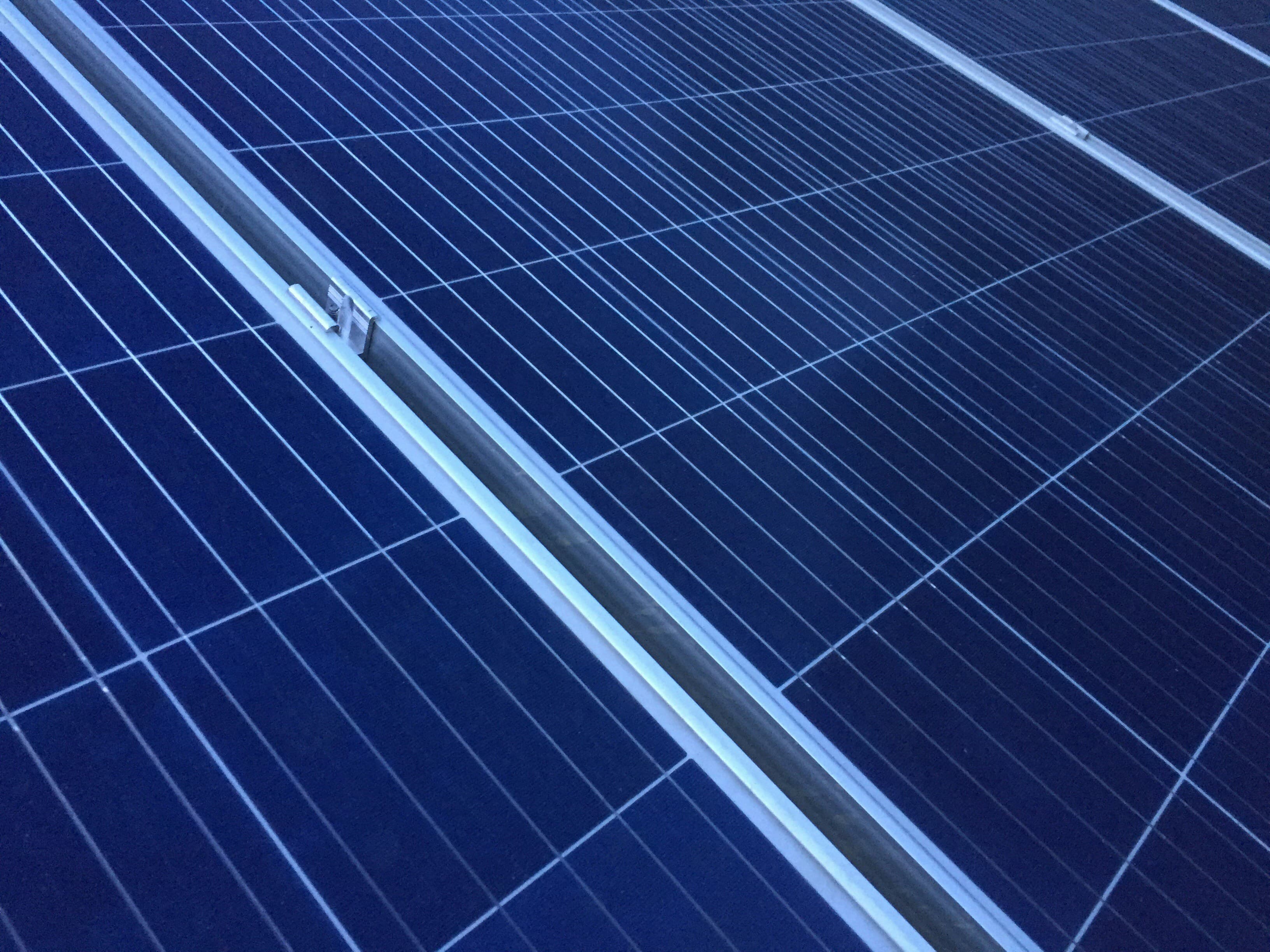
Solar panels in New York cost between $20,000 and $35,000 for a typical residential system before incentives, depending on system size, panel brand, roof complexity, and where in the state the home is located. The average cost per watt in New York is $2.75 to $3.30, which is slightly above the national average because of higher labor costs, permitting requirements, and the density of utility territories that each have different interconnection rules.
That sticker price is not the number you actually pay. New York has one of the strongest incentive stacks in the country — a state tax credit, block incentives through NYSERDA, property and sales tax exemptions, and net metering rules that let exported solar energy offset your bill. After those programs are applied, many New York homeowners end up paying 40 to 60 percent less than the gross system cost.
This guide breaks down the real cost by system size, walks through every incentive that changes the math, explains what makes one quote higher or lower than another, and covers the payback timeline and financing options that New York buyers should evaluate before signing.
The numbers, with sources
$2.75/W
Average installed cost per watt for residential solar in New York in 2026
EnergySage Solar Marketplace Data6.5 GW
Total solar capacity installed in New York as of Q3 2024, powering over 1.1 million homes
SEIA State Solar Spotlight — New York$3.3B
Total solar investment in New York in 2023, supporting over 12,000 solar jobs
SEIA State Solar Spotlight — New York25%
NY State solar equipment tax credit rate, capped at $5,000 per qualifying principal residence
NYS Dept. of Taxation and Finance15 years
Duration of NY property tax exemption for residential solar under RPTL Section 487
NYS Real Property Tax Law Section 487$51,378
Average 25-year electricity savings for New York homeowners who go solar
EnergySage Solar Marketplace Data6 GW
NY-Sun distributed solar goal as part of the Climate Leadership and Community Protection Act
NYSERDA NY-Sun Program
Solar panel cost by system size in New York
The total cost of a solar panel system scales with its size, measured in kilowatts (kW). A larger system produces more electricity and costs more upfront, but it also offsets more of your utility bill. The right size depends on your annual electricity usage, roof space, shading, and whether you plan to add battery storage or an EV charger in the future.
Here is what residential solar systems typically cost in New York before incentives, based on an average installed cost of $2.75 per watt from current marketplace data.
| System Size | Estimated Cost (Before Incentives) | Annual Production (est.) | Best For |
|---|---|---|---|
| 5 kW | $13,750 | 6,000–6,500 kWh | Small homes, low electricity usage, or apartments with roof access |
| 8 kW | $22,000 | 9,600–10,400 kWh | Average Long Island or Westchester home with moderate usage |
| 10 kW | $27,500 | 12,000–13,000 kWh | Larger homes, higher usage, or homes planning to add an EV |
| 12 kW | $33,000 | 14,400–15,600 kWh | High-usage homes or properties with electric heating |
| 15 kW | $41,250 | 18,000–19,500 kWh | Large properties, multi-zone HVAC, or future battery pairing |
The New York incentive stack that changes the real cost
New York has layered incentives at the state, city, and utility level that can reduce the net cost of a solar system by thousands of dollars. Not every homeowner qualifies for every program, and the amounts change as block allocations fill and program rules update. Here is the current stack that EnergiSense reviews on every proposal.
- NY State Solar Equipment Tax Credit — 25% of qualified solar equipment costs, capped at $5,000 per principal residence. Filed on your state income tax return.
- NY-Sun Block Incentives (NYSERDA) — per-watt incentives that vary by region, sector, and megawatt block. Long Island, Con Edison territory, and upstate each have different block availability. Your installer must be a participating NY-Sun contractor.
- Property Tax Exemption (RPTL Section 487) — solar energy systems are exempt from property tax increases for 15 years from the date of installation. Your home value increases, but your property tax assessment does not.
- Sales Tax Exemption — residential solar energy systems and installation labor are exempt from New York State and local sales tax, saving roughly 8% on the total system cost.
- Net Metering — exported solar energy creates bill credits through your utility (PSEG Long Island, Con Edison, or others). The value depends on your utility tariff and rate structure.
- NYC Property Tax Abatement — NYC properties may qualify for a separate city-level property tax abatement for solar electric generating systems after DOB review. This is in addition to the state credit.
- Federal ITC Caution — the IRS now states that no Residential Clean Energy Credit is allowed for property placed in service after December 31, 2025. Third-party-owned systems (lease or PPA) may still qualify under Section 48/48E. Cash and loan buyers should verify current eligibility with a tax professional.
What solar actually costs after incentives: New York examples
The before-incentive price is the number you see on the contract. The after-incentive cost is what you actually pay once credits, exemptions, and incentives are applied. Here is how the math can work for a typical 8 kW residential system in New York, assuming current program availability.
Start with the gross system cost of $22,000. Apply the NY State 25% equipment credit at the $5,000 cap. Factor in an estimated NY-Sun block incentive of $1,600 to $3,200 depending on region and current block. Add the sales tax exemption savings of roughly $1,760 (8% of $22,000). The net cost after these three levers can land between $12,040 and $13,640 — roughly 38 to 45 percent less than the sticker price.
The property tax exemption does not reduce the purchase price directly, but it protects you from higher property taxes for 15 years even though solar increases your home value. And net metering starts generating bill credits from day one of operation, compressing your payback period further.
These numbers are illustrative. The real proposal depends on your specific property, utility territory, current block availability, and tax situation. EnergiSense builds the incentive math from your address, not from statewide averages.
What makes one solar quote higher or lower than another
Two homes on the same street can get solar quotes that differ by $5,000 or more. The difference is not random — it comes from the physical and electrical characteristics of the property, the equipment selected, and the installer. Here are the factors that move the price.
- Roof type and condition — asphalt shingle roofs are the simplest and cheapest to install on. Flat roofs require ballasted or attached racking. Tile, slate, metal standing seam, and cedar shake each add labor and hardware cost. If the roof needs replacement, doing it before or alongside solar changes the project scope and can save money through a bundle.
- Roof orientation and pitch — south-facing roofs at 20 to 35 degrees produce the most energy in New York. East-west splits, steep pitches, dormers, and complex roof geometry can reduce production and sometimes require more panels to offset the same bill.
- Shading — trees, neighboring buildings, chimneys, and satellite dishes that cast shadows on the roof reduce panel output. Microinverters or power optimizers can mitigate partial shading but add cost compared to a string inverter on an unshaded roof.
- Panel brand and efficiency — premium panels from manufacturers like REC, Panasonic, or SunPower cost more per watt but produce more energy per square foot and often carry longer warranties. Standard-tier panels from brands like Canadian Solar, Trina, or Hanwha Q Cells cost less and perform well on roofs with plenty of space.
- Inverter type — string inverters are the most affordable. Microinverters (Enphase) or power optimizers (SolarEdge) cost more but perform better on shaded or complex roofs and allow panel-level monitoring.
- Electrical panel and service upgrade — older homes with 100-amp or 150-amp service panels may need an electrical upgrade to accommodate solar, adding $1,500 to $4,000 to the project.
- Permitting and utility territory — NYC DOB permits, PSEG Long Island interconnection, and Con Edison applications each have different timelines, costs, and inspection requirements.
- Installer experience and overhead — a company with NABCEP-certified installers, manufacturer certifications (like GAF Master Elite for roof work), and local permitting experience may quote higher than a subcontract-heavy national installer, but the installation quality, warranty support, and project management are different.
Solar payback period in New York
The payback period is how long it takes for your cumulative electricity savings to equal the net cost of your solar system. In New York, the payback period for residential solar typically falls between 6 and 11 years, depending on system size, electricity rate, incentive eligibility, and utility territory.
New York has some of the highest residential electricity rates in the country. The U.S. Energy Information Administration reports that New York residential electricity prices averaged 24.33 cents per kWh in 2024, compared to the national average of 16.94 cents. That higher baseline means each kilowatt-hour your solar system produces offsets a more expensive unit of grid electricity, which compresses the payback window.
After the payback period, every kilowatt-hour your system produces is effectively free electricity for the remaining 15 to 20 years of the system warranty. Over 25 years, the average New York homeowner saves approximately $51,378 on electricity costs according to current marketplace data.
How to pay for solar panels in New York
There are four main ways to pay for solar in New York. Each affects your upfront cost, long-term savings, and system ownership differently.
| Payment Method | Upfront Cost | You Own the System | Long-Term Savings | Best For |
|---|---|---|---|---|
| Cash purchase | Full system cost | Yes | Highest — no interest, full incentive capture | Homeowners with capital who want maximum ROI |
| Solar loan | $0 down (typical) | Yes | High — offset by interest payments | Homeowners who want ownership without large upfront payment |
| Solar lease | $0 down | No — leasing company owns it | Moderate — fixed monthly payment, no incentive capture | Homeowners who want predictable bills with no ownership responsibility |
| PPA (Power Purchase Agreement) | $0 down | No — provider owns it | Moderate — you buy power at a set rate below utility price | Homeowners who want immediate savings without ownership or maintenance |
Cost differences by New York region
New York is not one solar market. The utility territory, permitting environment, labor costs, and incentive block availability differ across the state. Here is how costs tend to vary by region.
- Long Island (Nassau and Suffolk) — PSEG Long Island territory. Strong NY-Sun block incentives historically. Higher labor costs than upstate. Net metering under PSEG tariff. Average system costs tend to be at or slightly above the statewide average.
- NYC (five boroughs) — Con Edison territory. NYC DOB permitting adds time and cost. The NYC property tax abatement is an additional incentive not available elsewhere in the state. Flat-roof installs are more common and can add racking cost. Fire setback and access path requirements apply.
- Westchester and Hudson Valley — Con Edison or Central Hudson territory depending on location. Costs are similar to Long Island. Larger properties with more roof space can accommodate bigger systems.
- Upstate New York — National Grid, NYSEG, or RG&E territory. Lower labor costs. Slightly less sun than downstate. NY-Sun block incentives are available but block levels and availability differ from downstate regions.
Why EnergiSense builds the cost from your property, not from averages
Most solar cost pages give you a statewide average and a zip code box. That is useful for ballpark research, but it is not how a responsible proposal works.
EnergiSense reviews your specific roof (age, material, orientation, pitch, shading), your utility account (territory, rate, usage pattern), your electrical panel (capacity, upgrade needs), and your incentive eligibility (property type, tax situation, NY-Sun block availability) before quoting a price. The proposal shows every line item, every incentive assumption, and every condition — because the cost should be traceable, not estimated.
If the roof needs work first, we say so. If the incentive math depends on a program that might close, we flag it. If the system should be sized differently than what the homeowner expected, we explain why. The goal is a proposal you can trust — not a number designed to get a signature.
FAQs
How much do solar panels cost in New York in 2026?
Solar panels in New York cost $2.50 to $3.50 per watt before incentives in 2026. For a typical 8 kW residential system, that puts the gross cost between $20,000 and $28,000. After the NY State 25% tax credit (up to $5,000), NY-Sun incentives, and sales tax exemption, the net cost can drop to $12,000 to $18,000 depending on region, utility, and current block availability.
What incentives reduce solar cost in New York?
New York has a five-layer incentive stack: the NY State 25% solar equipment tax credit (capped at $5,000), NY-Sun block incentives through NYSERDA (varies by region), a 15-year property tax exemption under RPTL Section 487, state and local sales tax exemption on solar equipment and labor, and net metering bill credits through your utility. NYC properties may also qualify for a separate city property tax abatement.
Is the federal 30% solar tax credit still available in 2026?
For homeowners who purchased solar with cash or a loan, the IRS now states that no Residential Clean Energy Credit is allowed for property placed in service after December 31, 2025. Third-party-owned systems through a solar lease or PPA may still benefit from the credit under Section 48/48E. Homeowners should verify current eligibility with a qualified tax professional.
How long does it take for solar panels to pay for themselves in New York?
The typical solar payback period in New York is 6 to 11 years, depending on system cost, incentive eligibility, electricity rate, and utility territory. New York residential electricity rates average about 24 cents per kWh — roughly 44% above the national average — which means each kWh your system produces offsets a more expensive unit of grid power, compressing the payback window.
Why does solar cost more in New York than other states?
New York solar costs are slightly above the national average due to higher labor rates, more complex permitting (especially in NYC), multiple utility territories with different interconnection requirements, and seasonal weather considerations for installation scheduling. However, New York also has higher electricity rates and stronger incentives, so the payback period and lifetime savings are often better than states with cheaper installs but lower utility costs.
What is the cheapest way to go solar in New York?
A cash purchase delivers the lowest total cost over 25 years because there are no interest charges and you capture all available incentives directly. If cash is not an option, a $0-down solar loan lets you own the system and claim incentives while spreading payments over 10 to 25 years. Solar leases and PPAs require no upfront payment but offer lower long-term savings because the provider owns the system and captures the incentives.
Does solar increase home value in New York?
Yes. Studies including research from the Lawrence Berkeley National Laboratory show that solar panels increase home sale prices by approximately $4 per watt of installed capacity. For an 8 kW system, that is roughly $32,000 in added home value. In New York, the RPTL Section 487 property tax exemption ensures that this increased value does not raise your property taxes for 15 years.
How do I get an accurate solar cost estimate for my home?
An accurate estimate requires a site-specific review of your roof (age, material, orientation, shading), your utility account (territory, rate, usage), your electrical panel (capacity, upgrade needs), and your incentive eligibility (property type, tax situation, NY-Sun block availability). EnergiSense provides a free property-specific proposal that shows every cost line item and incentive assumption rather than a statewide average.
About the author
Alex Lubin
Founder, EnergiSense — Independent Solar Advisor
- NABCEP PV Installation Professional
- GAF Master Elite (top 2% of US roofing contractors)
- Long Island, NY since 2021
Alex Lubin founded EnergiSense on Long Island in 2021 to give New York homeowners one person — not a call center — who covers both the roof and the solar system end-to-end. He holds the NABCEP PV Installation Professional certification (the industry credential that separates trained installers from unlicensed operators) and his roofing crew is GAF Master Elite certified, the top 2% of US roofing contractors. Every install carries Alex's name and a 5.0 Google rating across 17 reviews.
Full founder storyNext best page
Filed under: Incentives
Get my quote